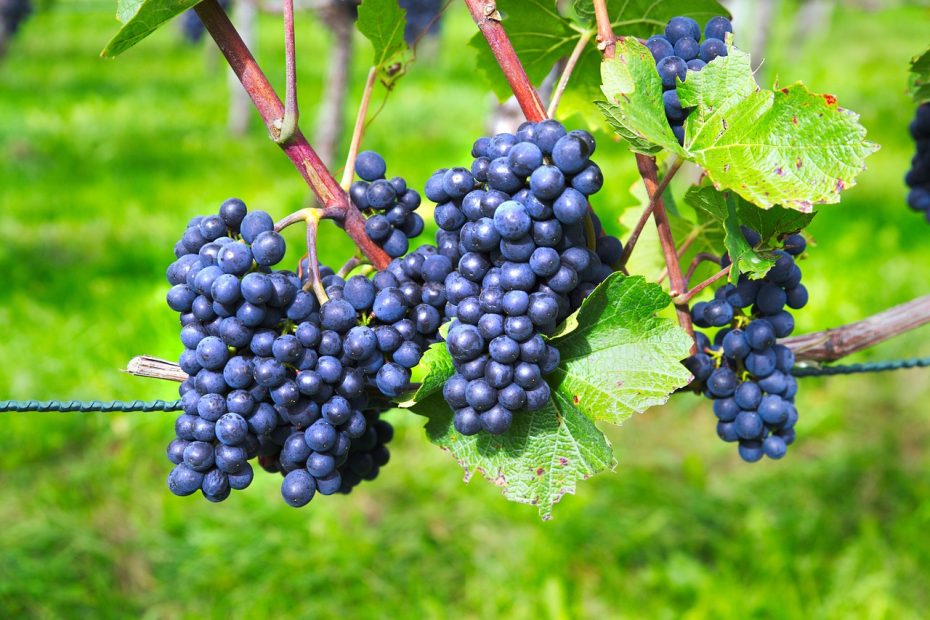
Vineyard
The vineyard is a song to Israel and Judah. God gave everything to Israel and Judah for them to prosper but they do not follow His word. Do You?
This is a Bible Study. Have your own Bible handy to look up the references mentioned.
If you do not have a Bible, I invite you to go to BibleGateway.com or another online Bible.
“Those who can read the song of the vineyard in Hebrew tell me that it is without doubt one of the most beautiful songs that has ever been written.” (McGee, J. Vernon, Thru the Bible: Volume III. [Nashville: Thomas Nelson, 1983], 202)
1. “The preacher became a troubadour and sang a folk song to the Lord (‘my beloved’).” (Wiersbe, Warren W, The Bible Exposition Commentary Old Testament Wisdom and Poetry. [Colorado Springs: David C Cook, 2004], 16)
“‘My beloved’ is the Lord Jesus Christ…God is again inviting us into court to consider His charges against Israel. And, my friend, the minute you listen to Him and His charge against Israel, you will find yourself condemned.” (McGee, 202)
2. “At the end of the verse, the song turns into a complaint because, after a long time of ‘hopeful waiting’ for the vines to mature, he found only sour rotten fruit.” (Smith, Gary V. The New American Commentary, Volume 15a, Isaiah 1-39. [© Copyright 2007 B&H Publishing Group], 167)
3. “God asks these people to judge, to equate the difference between God and Israel. Very candidly, friend, when you look at your own life, are you ready to complain against God?” (McGee, 202)
Bad Grapes
4. “God had cared for His vineyard and provided it with everything necessary to prosper (vv. 2, 4) but the vineyard did not produce good grapes (v. 4).” (The Moody Bible Commentary, The Moody Bible Institute of Chicago, [Moody Publishers, Chicago, IL, 2014], 1015)
5. “Because the vineyard had not produced, all the provisions would be taken from it.” (Moody, 1015)
6. The vinedresser would lay it waste so that it no longer had the opportunity to bring forth produce.” (Moody, 1015)
7. “The vineyard is finally identified as a symbol of Israel and Judah, referring to all the covenant people.” (Smith, 168)
References
Holman Christian Standard Bible (HCSB)
Copyright © 1999, 2000, 2002, 2003, 2009 by Holman Bible Publishers, Nashville Tennessee. All rights reserved.
New American Standard Bible (NASB)
New American Standard Bible®, Copyright © 1960, 1971, 1977, 1995, 2020 by The Lockman Foundation. All rights reserved.
New King James Version (NKJV)
Scripture taken from the New King James Version®. Copyright © 1982 by Thomas Nelson. Used by permission. All rights reserved.
In this article Scripture quotations taken from KJV.
Smith, Gary V. The New American Commentary, Volume 15a, Isaiah 1-39. © Copyright 2007 B&H Publishing Group
McGee, J. Vernon, Thru the Bible: Volume III. Nashville: Thomas Nelson, 1983
The Moody Bible Commentary, The Moody Bible Institute of Chicago, Moody Publishers, Chicago, IL, 2014
Wiersbe, Warren W, The Bible Exposition Commentary Old Testament Wisdom and Poetry. Colorado Springs: David C Cook, 2004
