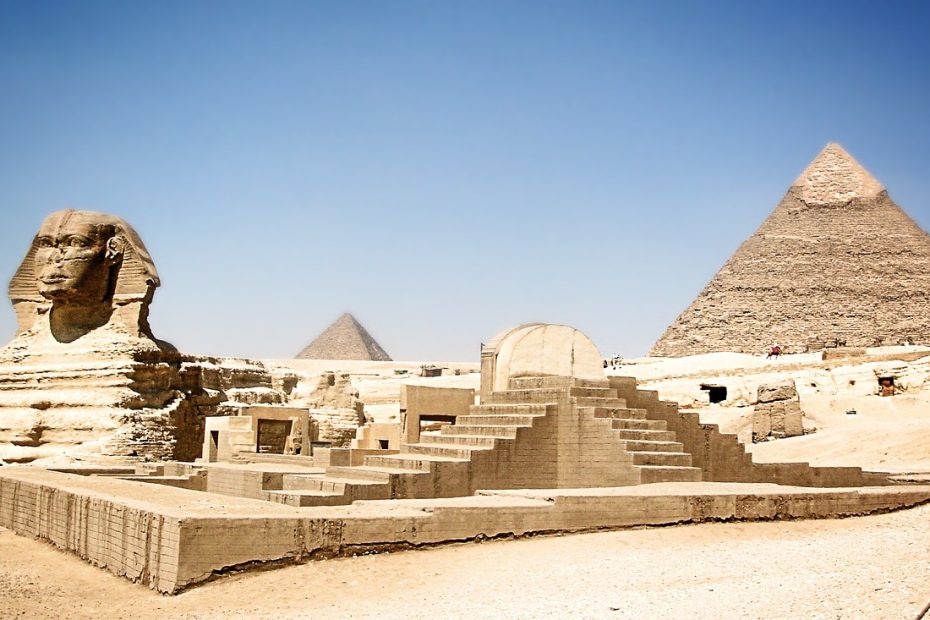
Egypt
The Israelites went to Egypt after Joseph was sold into captivity. After 400 years the Israelites were slaves in Egypt, Pharaoh would not let them leave when Moses went to meet with him.
This is a Bible Study. Have your own Bible handy to look up the references mentioned.
If you do not have a Bible, I invite you to go to BibleGateway.com or another online Bible.
“Fulfilled prophecy is proof that the Bible is the Word of God. No nation figures more prominently on the pages of Scripture than Egypt in its relation to Israel.” (McGee, J. Vernon, Thru the Bible: Volume III. [Nashville: Thomas Nelson, 1983], 241)
1. “The Assyrian conquest proved that the many gods of Egypt were powerless to help, and that the mediums and wizards were unable to give counsel (v. 3).” (Wiersbe, Warren W, The Bible Exposition Commentary Old Testament Wisdom and Poetry. [Colorado Springs: David C Cook, 2004], 26)
2. “At about the time of Isaiah several pharaohs arose who could no longer control this great kingdom, and the army no longer obeyed them. The people no longer respected the government.” (McGee, 242)
3. “Despite their attempts to find answers by consulting their idols . . . mediums and spiritists (v. 3), Egypt is still at the mercy of the Lord (v. 4).” (The Moody Bible Commentary, The Moody Bible Institute of Chicago, [Moody Publishers, Chicago, IL, 2014], 1032)
4. “This ‘cruel lord’ cannot be positively identified from history, as Egypt was attached and subdued by a series of invaders who eventually reduced the nation to poverty.” (McGee, 242)
Drought
5. “The Nile River, the source of Egypt’s economy, and the streams and canals of the land, would all dry up; this would put farmers, fishermen, and cloth manufactures out of business (vv. 5-10).” (Wiersbe,26)
6-7. “Plant life, water reeds, and crops that depend on irrigation in the lush Delta area will dry up, be parched by the hot sun, and cease to exist.” (Smith, Gary V. The New American Commentary, Volume 15a, Isaiah 1-39. [© Copyright 2007 B&H Publishing Group], 357)
8. “If there is no flowing water the fish will soon die, leaving nothing for the fishermen to catch with their nets or hooks.” (Smith, 357)
9-10. “The author shows how this drought will affect the industry of making clothes. The farmers who raise the flax and weavers that comb the linen into cloth will despair because of this drought.” (Smith, 357)
Zoan
11-13. “For centuries, the Egyptians were respected for their wisdom, but now the princes and counselors would not know what to do (vv. 11-13).” (Wiersbe, 27)
12. “With a taunt in his voice, the prophet asks these wise sages to reveal God’s plan for Egypt in the future.” (Smith, 358)
13. “‘Noph’ is Memphis as we know it.
They have also seduced Egypt.” (McGee, 243)
14. “This is a vivid picture of the reduction of Egypt to a base kingdom.” (McGee, 243)
14-15. “Instead of walking a straight path, the nation was led astray by leaders who were as dizzy as a drunken man staggering around in his vomit (vv. 14-15).” (Wiersbe, 27)
In That Day
16. “The Egyptian’s are compared to fearful shuddering women (cf. Jeremiah 51:30; Nahum 3:13) rather than strong, valiant, and fearless soldiers.” (Smith, 360)
17. “Egypt’s fear of God also involves a recognition of their own inability to control their future. Learning to fear God has a positive side to it, because it brings the person who fears God to the place where they recognize the power and glory of Almighty God.” (Smith, 360)
18. “The reference to the five cities has been a source of confusion as the number of cities is relatively small in comparison to the number of cities actually in Egypt.” (Moody, 1033)
19. “The next ‘in that day’ describes why the Egyptians will turn to Israel’s God and how they will worship him.” (Smith, 361)
20. “God allows an Egyptian cultural expression of their relationship to God through their own altar and pillar.” (Smith 361)
21-22. “Egypt has a glorious future. The nation will enter and enjoy the kingdom with Israel.” (McGee, 244)
23. “These spiritual changes will bring about a great political change: Israel, Egypt, and Assyria (modern Iraq) will cooperate and enjoy the blessings of the Lord!” (Wiersbe, 27)
24. “Note the exalted position of Egypt in the Kingdom.” (McGee, 244)
25. “A blessing is yet to come to Egypt, a despised and debased nation.” (McGee, 244)
“Knowing how the radical Muslims control much of Egypt, Iraq, and Iran today this prophecy still seems an amazing promise of the miraculous transforming power of God’s presence and grace.” (Smith, 264)
References
Holman Christian Standard Bible (HCSB)
Copyright © 1999, 2000, 2002, 2003, 2009 by Holman Bible Publishers, Nashville Tennessee. All rights reserved.
New American Standard Bible (NASB)
New American Standard Bible®, Copyright © 1960, 1971, 1977, 1995, 2020 by The Lockman Foundation. All rights reserved.
New King James Version (NKJV)
Scripture taken from the New King James Version®. Copyright © 1982 by Thomas Nelson. Used by permission. All rights reserved.
In this article Scripture quotations taken from KJV.
Smith, Gary V. The New American Commentary, Volume 15a, Isaiah 1-39. © Copyright 2007 B&H Publishing Group
McGee, J. Vernon, Thru the Bible: Volume III. Nashville: Thomas Nelson, 1983
The Moody Bible Commentary, The Moody Bible Institute of Chicago, Moody Publishers, Chicago, IL, 2014
Wiersbe, Warren W, The Bible Exposition Commentary Old Testament Wisdom and Poetry. Colorado Springs: David C Cook, 2004
