Warning
God is giving us a warning if we do not follow Him. We need to listen to those who are following Jesus and treat this as a warning.
This is a Bible Study. Have your own Bible handy to look up the references mentioned.
If you do not have a Bible, I invite you to go to BibleGateway.com or another online Bible.
1. “Isaiah saw storm clouds gathering over the city and announced that trouble was coming.… Isaiah began his message by announcing God’s judgment on Ephraim.” (Wiersbe, Warren W, The Bible Exposition Commentary Old Testament Wisdom and Poetry. [Colorado Springs: David C Cook, 2004], 34)
“The Lord was appalled by their drunkenness. To the Jews, wine was a gift from God and a source of Joy (Jud. 9:13; Ps. 104:15). The Law did not demand total abstinence, but it will warn against drunkenness (Deut. 21:18-21; Prov. 20:1; 23:20-32, 29-35).” (Wiersbe, 34)
2. Woe “generally (but not always, cf. Is 55:1) precedes a warning of God’s coming judgment and contains within it an expression of sympathy or pity.” (The Moody Bible Commentary, The Moody Bible Institute of Chicago, [Moody Publishers, Chicago, IL, 2014], 1039)
3. God “simply tells us that this is what He did. The prophet picks up the future of the drunkard here.” (McGee, J. Vernon, Thru the Bible: Volume III. [Nashville: Thomas Nelson, 1983], 260)
4. “She would become nothing more than the fading flower worn like a crown by the partygoers. Ripe for the picking, they would soon be swallowed by the Assyrian enemy, a prediction that came true in 721 B.C.” [Max Anders and Trent C. Butler (2012). HOTC Vol. 15: Isaiah. B&H Publishing Group. Retrieved from https://read.lifeway.com]
Crown
5-6. “The prophet maintains his focus on the wreath or crown concept (28:1,3,4) to develop his thoughts about the good things God will do in the future.” (Smith, Gary V. The New American Commentary, Volume 15a, Isaiah 1-39. [© Copyright 2007 B&H Publishing Group], 477)
7. “The wine causes the priests to make bad decision or give inappropriate spiritual advice.” (Smith, 480)
8. “The putrid and disgusting aftermath of this drunken confusion is compared to a table completely covered with their vomit and filth.” (Smith, 480)
9. “The He of v. 9 most likely refers to God and the message delivered by His prophet. The sarcastic response of the priests and prophets in v. 9 reflect both this arrogance and ignorance.” (Moody, 1040)
10. “Isaiah is saying their babbling nonsensical repetition of words sounds like the gibberish of babies. The words should just be transliterated in English text and given no meaning, demonstrating it as meaningless chatter.” (Smith, 482)
11. “The reference to the stammering lips and strange tongue in v. 11 refers to the language of the Assyrian empire. The failure of the leaders to listen to God’s message through the prophets will force God to make them hear Him through the sword of Assyria.” (Moody, 1040)
12. “God had originally promised his people that the land of Israel would be a place of ‘rest’ (cf. Deut. 12:9-10; 25:19; 1 Kgs 5:8; 8:56) where they could be secure from danger and war.” (Smith, 482)
13. “The babbling comes to bring judgment and punitive consequences.” (Moody, 1040)
Death
14. “The ‘therefore’ indicates that these words are a response to the people’s unwillingness to listen to the word of God in the previous paragraph (28:12).” (Smith, 485)
15. “The rulers of Judah believed the message of this vision provided protection from Sheol; but in reality this ‘covenant with death’ only hurried their arrival.” (Smith, 486)
“Isaiah understood this vision of their future as political suicide, a lie, a false perception of reality, and an idea that had no legitimate basis.” (Smith, 486)
16. God “will place in Zion a stone or a cornerstone. The stone is described as being tested and costly. It will offer a foundation firmly placed and the one who believes in it will not be disturbed.” (Moody, 1041)
17. “The cornerstone will provide safety from the implementation of God’s just rule, which will sweep away the refuge of lies.” (Moody, 1041)
18-19. “As God establishes His new order, the covenant with death be terminated. Its useless ness will be revealed as the Lord brings the overwhelming scourge upon the people and it will not stop.” (Moody, 1041)
20. “The people’s securities and comforts are no more. Even their beds do not provide comfort.” (Moody, 1041)
21. “What will actually happen is that ‘Surely God will arise’ and accomplish a strange work among them.” (Smith, 489)
22. “The prophet pleads with his audience to stop proudly scoffing (28:22 is picking up a theme from 28:14) at God’s warnings, for if they do not change their ways, God will make their suffering even worse.” (Smith, 490)
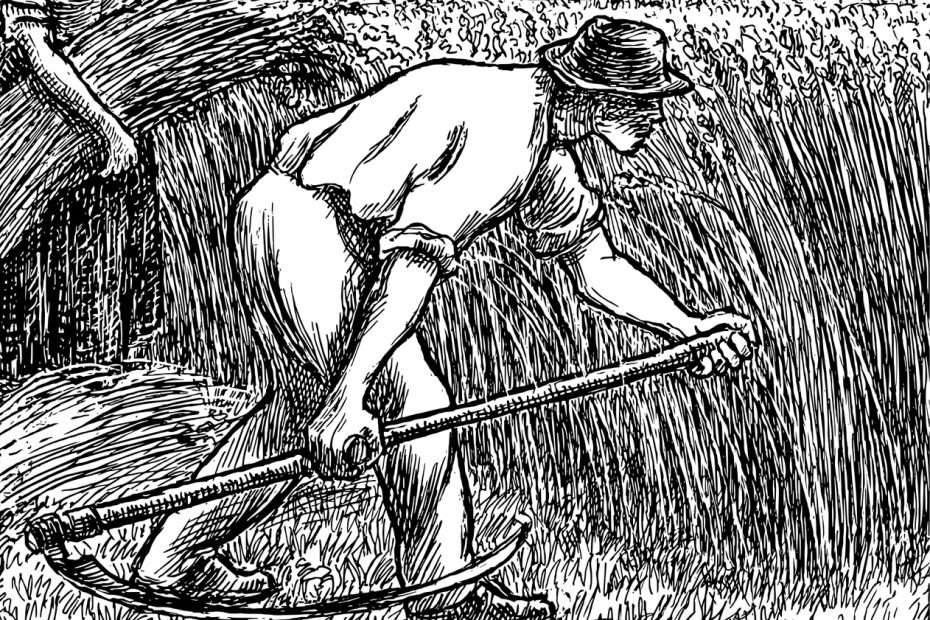
Farming
23-29. “The idea of God/the gods giving farmers wisdom about the process of farming is not an uncommon theme in ancient Near Eastern literature, so the audience would have understood this story without any trouble.” (Smith, 491)
“The wise farmer hears God’s instruction and is successful because he follows God’s wise counsel. Should not the spiritual and political leaders of Judah do the same?” (Smith, 491)
“God could be compared to a farmer who engaged in many activities to prepare the soil, sow the seed, harvest, and thresh the crop. The farmer did not spend all his time doing the same thing.” [Max Anders and Trent C. Butler (2012). HOTC Vol. 15: Isaiah. B&H Publishing Group. Retrieved from https://read.lifeway.com]
“Just as a farmer has different tasks to perform and must adapt himself to each task whether plowing or threshing, so God must do the work that is necessary to bring about His eternal purposes.” (Wiersbe, 35)
Planting
“The seeds in question each require specific planting techniques. The farmer understands the needs of each of the needs of each of the seeds and cares for them to secure his harvest.” (Moody, 1041)
“The simple farmer has been taught by God to care for his field and to do what is necessary to care for his produce. The knowledge of planting harvesting, and threshing does not come from and agrarian god, but from the Lord of hosts.” (Moody, 1041)
If the people “will listen to God’s wisdom and respond in the right way, they can avoid the disasters that Isaiah has predicted in 28:7-22.” (Smith, 493)
“If you are hard and resist God, you are a hard grain. You are a hard nut to crack, and the judgment is going to be severe for you.” (McGee, 262) Matthew 13:30; 41
“If we only will listen to Him, He will put us over where the wheat is and spare us the severity of His judgment.” (McGee, 262)
References
Holman Christian Standard Bible (HCSB)
Copyright © 1999, 2000, 2002, 2003, 2009 by Holman Bible Publishers, Nashville Tennessee. All rights reserved.
New American Standard Bible (NASB)
New American Standard Bible®, Copyright © 1960, 1971, 1977, 1995, 2020 by The Lockman Foundation. All rights reserved.
New King James Version (NKJV)
Scripture taken from the New King James Version®. Copyright © 1982 by Thomas Nelson. Used by permission. All rights reserved.
In this article Scripture quotations taken from KJV.
Smith, Gary V. The New American Commentary, Volume 15a, Isaiah 1-39. © Copyright 2007 B&H Publishing Group
McGee, J. Vernon, Thru the Bible: Volume III. Nashville: Thomas Nelson, 1983
The Moody Bible Commentary, The Moody Bible Institute of Chicago, Moody Publishers, Chicago, IL, 2014
Wiersbe, Warren W, The Bible Exposition Commentary Old Testament Wisdom and Poetry. Colorado Springs: David C Cook, 2004
