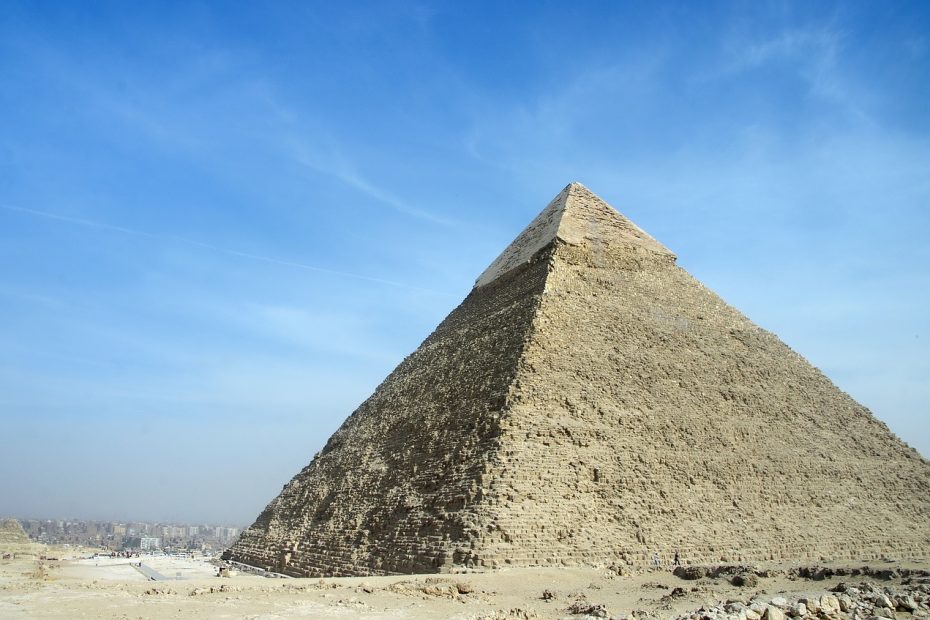
Egypt
The Israelites are turning to Egypt for help against the Assyrian army. Isaiah warned them that counting on Egypt was not in God’s will.
This is a Bible Study. Have your own Bible handy to look up the references mentioned.
If you do not have a Bible, I invite you to go to BibleGateway.com or another online Bible.
1. “In a society that placed supreme value on children obeying their parents (Deut. 21:18-20), Judah had rebelled against their Heavenly Father.” [Max Anders and Trent C. Butler (2012). HOTC Vol. 15: Isaiah. B&H Publishing Group. Retrieved from https://read.lifeway.com]
2. “After all that God had done for His people, they turned away from Him and sought the help of feeble Egypt.…Egypt was but a shadow, and what could a shadow do against the great Assyrian army?” (Wiersbe, Warren W, The Bible Exposition Commentary Old Testament Wisdom and Poetry. [Colorado Springs: David C Cook, 2004], 36)
3. “The prophet confronts and condemns this senseless choice because trusting in Egypt for refuge or shelter will only bring shame (used three times in vv. 3-5) and disgrace.” (Smith, Gary V. The New American Commentary, Volume 15a, Isaiah 1-39. [© Copyright 2007 B&H Publishing Group], 512)
4. “Judah’s shame is connected to Egypt’s uselessness, who gave no help and provided no profit or advantage to Judah.” (Smith, 513)
5. “Isaiah’s warning was absolutely clear. Their action opposed God’s will of God and would lead to utter failure.” (Smith 513)
Beasts
6. “In this context a discussion of the dangerous animals in the southern desert between Judah and Egypt serves as a warning to the envoys that were traveling from Judah to Egypt.” (Smith, 513)
7. “Egypt’s inability earned it the nickname Rahab who has been exterminated. Rahab is used throughout Scripture to denote a mythical chaos monster (Job 9:13; 26:12; Psalm 89:11; Isaiah 51:9).” (The Moody Bible Commentary, The Moody Bible Institute of Chicago, [Moody Publishers, Chicago, IL, 2014], 1045)
8. “If Isaiah would write down what God said before the event, people would know that God’s words are true if the actual events matched the predictions.” (Smith 514)
9. “God told Isaiah to make a placard that said, ‘This is a rebellious people, lying children, children who will not hear the Law of the Lord.’” (Wiersbe, 37)
10. The people “call the prophets to ignore their visions and to deliver only pleasant messages. The want to hear lies over the truth.” (Moody, 1045)
11. “The statement in v. 11 is a bold affirmation of Israel’s desire to avoid the word of God: let us hear no more about the Holy One of Israel.” (Moody, 1045)
12-14. “Verse 12 repeats the reason for God’s judgment, while vv. 13-14 describe the consequences of the people’s sins.” (Smith, 515)
15-17. “Isaiah consistently called Judah to trust God in the most difficult political and military situations (cp. ch. 7). Judah consistently trusted her political alliances and her political savvy.” [Max Anders and Trent C. Butler (2012). HOTC Vol. 15: Isaiah. B&H Publishing Group. Retrieved from https://read.lifeway.com]
Mercy
18. “We are told that they who wait on the Lord will renew their strength. You cannon rush God.…Maybe things are not working out the way you think they should; maybe you and I would like to rearrange them, but let God work things out.” (McGee, J. Vernon, Thru the Bible: Volume III. [Nashville: Thomas Nelson, 1983], 266)
19. “The note of comfort offered to Zion begins with God’s gracious offer that if Israel turns to Him for help, God will respond to the cries of His people.” (Moody, 1045)
20. “God will no longer hide himself in the sense of seeming distant or of a failure to act on their behalf (45:15; 59:1-2; Ps 27:8-9; 4:23-24; 102:1-2). (Smith, 521)
21. “His presence will be seen, for he will be active among them, instructing in the way they should walk.” (Smith, 521)
22. “God’s presence and his teaching will result in the total rejection of idols covered with a thin layer of gold or silver to make them look important.” (Smith, 521)
Water
23. “Rain will water the ground and bring forth produce that will feed even the people’s livestock lavishly.” (Moody, 1046)
24. “The salted fodder is particularly extravagant feed for the animals, suggesting that God has blessed the Israelites with such abundance that they are even willing to share with their livestock.” (Moody, 1046)
25. “The ‘great slaughter’ is the battle of Armageddon, which will occur just before the return of the Lord to deliver His people and establish His kingdom (Rev. 19:11-21).” (Wiersbe, 37)
26. “The land would be restored and become prosperous again, and God would bind up the bruises and heal the wounds of His people see 1:5-6.” (Wiersbe, 37)
Anger
27. God “is described as burning in His anger and dense with smoke.” (Moody, 1046)
28. “God will also shake the nations back and forth in a sieve, with the word sieve drawing on agricultural imagery.” (Moody, 1047)
29. “The people’s happiness is compared to the time when one marches to the sound of the flute, to go up to the mountain of the Lord, to the Rock of Israel.” (Moody, 1047)
30-31. “It is God’s voice that will destroy Assyria, which here represents all the nations that oppressed Israel (vv. 30-31).” (Moody, 1047)
32. “The divine warrior does not struggle to overcome the Assyrian enemy, as if he were in mortal combat with an equal. Instead, God decrees with his voice (30:30,31), passes his staff over the condemned (30:30,32), and accomplishes his will.” (Smith, 526)
33. “‘Tophet’ was a place in the valley of the son of Hinnom where the most abominable idolatries were practices. Little children were offered as sacrifices!” (McGee, 266)
“It was defiled by Josiah (2 Kings 23:10), turned into a garbage dump, and named ‘Gehena,’ which comes from ge-ben-hinnom, meaning the ‘valley of Himmon.’” (Wiersbe, 37)
“‘Gehenna’ is the New Testament word for ‘hell.’” (Wiersbe, 37)
References
Holman Christian Standard Bible (HCSB)
Copyright © 1999, 2000, 2002, 2003, 2009 by Holman Bible Publishers, Nashville Tennessee. All rights reserved.
New American Standard Bible (NASB)
New American Standard Bible®, Copyright © 1960, 1971, 1977, 1995, 2020 by The Lockman Foundation. All rights reserved.
New King James Version (NKJV)
Scripture taken from the New King James Version®. Copyright © 1982 by Thomas Nelson. Used by permission. All rights reserved.
In this article Scripture quotations taken from KJV.
Smith, Gary V. The New American Commentary, Volume 15a, Isaiah 1-39. © Copyright 2007 B&H Publishing Group
McGee, J. Vernon, Thru the Bible: Volume III. Nashville: Thomas Nelson, 1983
The Moody Bible Commentary, The Moody Bible Institute of Chicago, Moody Publishers, Chicago, IL, 2014
Wiersbe, Warren W, The Bible Exposition Commentary Old Testament Wisdom and Poetry. Colorado Springs: David C Cook, 2004
