Demon
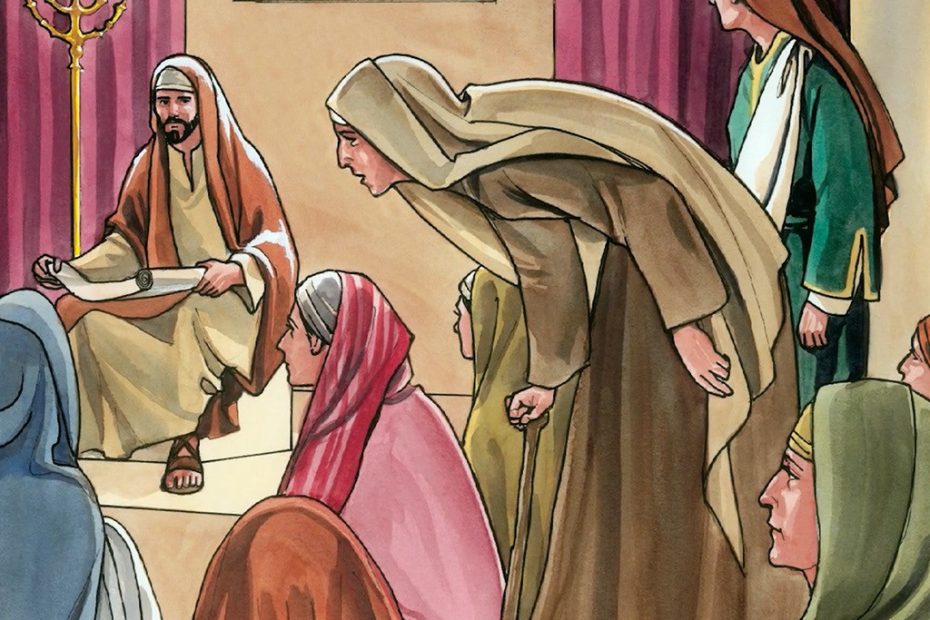
Jesus was asked to heal some people by removing a demon from them. One was a child who had a demon. Also, there were others healed by Jesus
This is a Bible Study. Have your own Bible handy to look up the references mentioned.
If you do not have a Bible, I invite you to go to BibleGateway.com or another online Bible.
Moses and Elijah
32. “This is glory that belongs to the heavenly realm, to the Father and his angels (9:26). Thus the three disciples got a preview of the reigning King and Judge before he fully entered his glory. This confirmed for them Jesus’ divine nature.” [Max Anders and Trent C. Butler (2012). HNTC Vol. 03: Luke. B&H Publishing Group. Retrieved from https://read.lifeway.com]
33. “The overwhelming splendor of the event and the heady privilege of seeing Moses and Elijah prompted Peter to speak—but he did so without thinking (not realizing what he was saying.” (Moody, 1570)
34. “The divine presence comes upon the scene in the form of a cloud, a common symbol of the presence of God.” (Stein, 2860
35. “The voice that came from the cloud was unmistakably that of God the Father (since He identified Jesus as My Son).” (Moody, 1571)
36. “Silence followed the divine proclamation. Moses and Elijah had left at some point. The disciples also left the mountain, not telling anyone of the experience until the cross and the resurrection validated it.” [Max Anders and Trent C. Butler (2012). HNTC Vol. 03: Luke. B&H Publishing Group. Retrieved from https://read.lifeway.com]
Demon
37. “Life cannot be lived on the mountaintop. The most sublime experience with God must end. You must face life again in the valley. There the crowds come clamoring for action.” [Max Anders and Trent C. Butler (2012). HNTC Vol. 03: Luke. B&H Publishing Group. Retrieved from https://read.lifeway.com]
38. Jesus is faced with several situations after He descended the mountain. “The first situation involved a father and his boy possessed by a demon.” (Moody, 1571)
39-40. The man was “’begging’ Jesus to help (9:38b), and he was describing his son’s sorry condition (9:39). Furthermore, he was lamenting the disciples’ failure to deal with the demon (9:40).” (Moody 1571)
41. “Jesus had the answer. This entire generation, including the disciples, were unbelieving and rebellious—twisted, perverted, crooked. They had become a burden that Jesus had to endure.” [Max Anders and Trent C. Butler (2012). HNTC Vol. 03: Luke. B&H Publishing Group. Retrieved from https://read.lifeway.com]
42. “The devil tried one last throw (a wrestling term in the Greek), but Jesus rebuked the demon and cast him out.” (Wiersbe, 208)
43. “Although this ‘unbelieving and perverse generation’ (9:41) marveled at Jesus’ ministry, its perversity and lack of faith resulted in unbelief and incomprehension (9:45).” (Stein, 290)
44-45. His disciples “didn’t quite understand this matter of being raised from the dead. Here He is talking about His own death for them, and you would think that these men might have at least made some inquiry.” (McGee, 289)
Greatest
46. “Luke recorded an argument between the disciples over which of them might be the greatest.” (Moody, 1571)
47. Lukes “addition to the narrative reveals Jesus’ prophetic insight.” (Stein, 293)
48. “In His kingdom, the example of greatness is a little child—helpless, dependent, without status, living by faith.…There is a great difference between being childlike and childish (see 1 Cor. 13:4-5, 14:20)! (Wiersbe, 209)
49. “”We saw someone who does not belong to our group. He was using Jesus’ name to cast out demons. What shall we do with the heretic? You know what we did. We went right up and tried to stop him, but we could not.” [Max Anders and Trent C. Butler (2012). HNTC Vol. 03: Luke. B&H Publishing Group. Retrieved from https://read.lifeway.com]
50. “Jesus had the answer. “Leave them alone. If they are carrying out our mission in our name and not doing anything to oppose us, then they are part of us, too. They just belong to that other flock that we have never met.” [Max Anders and Trent C. Butler (2012). HNTC Vol. 03: Luke. B&H Publishing Group. Retrieved from https://read.lifeway.com]
Jerusalem
51. “Knowing the divine plan, Jesus (literally) ‘set his face to go to Jerusalem’ (cf. Isa 50:7).” (Stein, 298)
52. “Just as people of Nazareth expressed prejudice against the hometown boy when Jesus opened his ministry (4:16-30), so the Samaritans expressed opposition as Jesus closed his public ministry and turned to Jerusalem.” [Max Anders and Trent C. Butler (2012). HNTC Vol. 03: Luke. B&H Publishing Group. Retrieved from https://read.lifeway.com]
53. “The disciples must learn from the Master that commitment to the mission brings rejection from some people.” [Max Anders and Trent C. Butler (2012). HNTC Vol. 03: Luke. B&H Publishing Group. Retrieved from https://read.lifeway.com]
54. “James and John had seen the prophet Elijah on the mount, so they thought they might imitate him and call down fire from heaven. (2 Kings 1)! (Wiersbe, 209)
55. “The disciples had not yet learned how to concentrate on the mission of preaching the kingdom and healing the sick. They had not learned to depend on God to empower their mission.” [Max Anders and Trent C. Butler (2012). HNTC Vol. 03: Luke. B&H Publishing Group. Retrieved from https://read.lifeway.com]
56. “Luke did not give the name of either village. Such information, although interesting to us, was irrelevant for his purpose.” (Stein, 299)
Follow Me
57. “Have you counted the cost? Do you realize what you are setting yourself up for? Are you ready to cut past ties and depend absolutely on the commitment to God in the future? What do you really mean when you say I will follow you wherever you go?” [Max Anders and Trent C. Butler (2012). HNTC Vol. 03: Luke. B&H Publishing Group. Retrieved from https://read.lifeway.com]
58. “Following Jesus meant having nowhere to lay one’s head. Those who follow Jesus may not enjoy the comforts of home in this life.” (Moody, 1572)
59. “The request to bury my father did not mean he needed to attend a funeral but that he needed to wait until his father died.” (Moody, 1572)
60. Jesus “was not making a callous demand of a grieving son but calling on this man to forsake any potential personal benefit and to put eternal loyalties and commitment above all other—even family—loyalties and temporal commitments.” (Moody, 1572)
61. “Jesus knew, however, that were the man to go home the strength of his commitment to follow the Lord would weaken and that he would be drawn back by the bonds of family love.” (Moody, 1572)
62. This “refers here to gazing back on the things abandoned in order to follow Jesus (cf. Phil 3:13). In this instance the reference is to family relationships (Luke 9:61), but the saying has broader implication as well (cf. 2 Tim 2:4).” (Stein, 301)
References
Holman Christian Standard Bible (HCSB)
Copyright © 1999, 2000, 2002, 2003, 2009 by Holman Bible Publishers, Nashville Tennessee. All rights reserved.
New American Standard Bible (NASB)
New American Standard Bible®, Copyright © 1960, 1971, 1977, 1995, 2020 by The Lockman Foundation. All rights reserved.
New King James Version (NKJV)
Scripture taken from the New King James Version®. Copyright © 1982 by Thomas Nelson. Used by permission. All rights reserved.
In this article Scripture quotations taken from KJV.
McGee, J. Vernon, Thru the Bible: Volume IV. Nashville: Thomas Nelson, 1983
Max Anders and Trent C. Butler (2012). HNTC Vol. 03: Luke. B&H Publishing Group. Retrieved from https://read.lifeway.com]
The Moody Bible Commentary, The Moody Bible Institute of Chicago, Moody Publishers, Chicago, IL, 2014
Stein, H. Robert, The New American Commentary Volume 24, Luke. Broadman Press, 1996
Wiersbe, Warren W, The Bible Exposition Commentary New Testament Volume 2. Colorado Springs: David C Cook, 1989
