Leaders
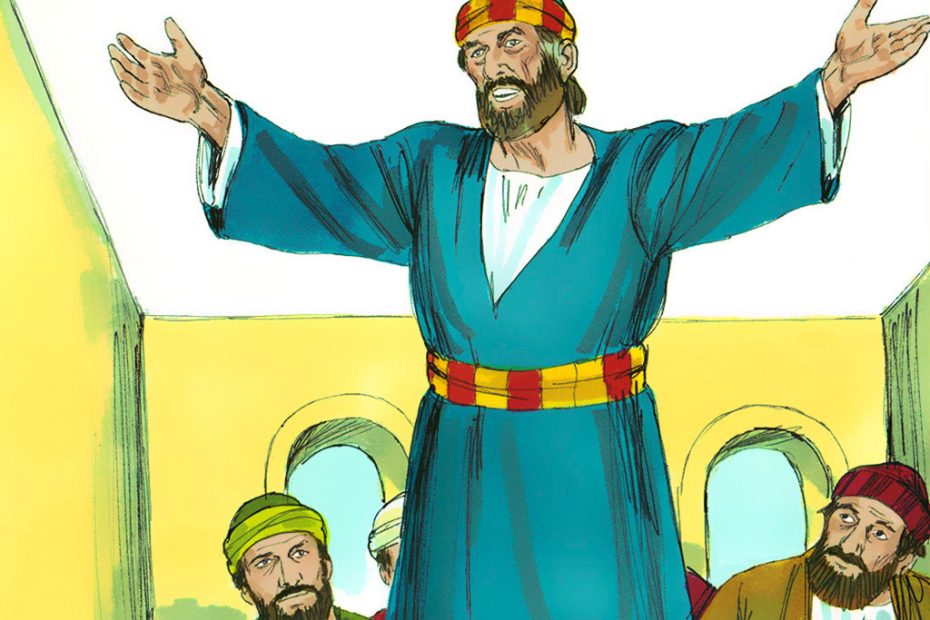
What are leaders supposed to do? The leaders are servants of God. They need to be faithful to Jesus Christ.
This is a Bible Study. Have your own Bible handy to look up the references mentioned.
If you do not have a Bible, I invite you to go to BibleGateway.com or another online Bible.
1a. “The apostle concluded that the Corinthians should view him and other Christian leaders in two ways. First, Christian leaders should be viewed as servants of Christ.” [Max Anders and Richard Pratt (2012). HNTC Vol. 07: I & II Corinthians. B&H Publishing Group. Retrieved from https://read.lifeway.com]
1b. “Second, Paul said that Christian leaders were stewards (those entrusted). Stewards were high-ranking servants entrusted with the oversight of households. They were especially responsible for the management and distribution of household resources.” [Max Anders and Richard Pratt (2012). HNTC Vol. 07: I & II Corinthians. B&H Publishing Group. Retrieved from https://read.lifeway.com]
2. “Notice that it is not required of a steward to be eloquent or to have many gifts, only that he be found faithful.” (McGee, J. Vernon, Thru the Bible: Volume V. [Nashville: Thomas Nelson, 1983], 20)
3. “Paul did not get upset when people criticized him, for he knew his master’s judgment was far more important.” (Wiersbe, Warren W, The Bible Exposition Commentary New Testament Volume 2. [Colorado Springs: David C Cook, 1989], 582)
4. “Only the Lord determines the faithfulness of his servant/steward. Ultimately Paul, all other Christian stewards, and all believers will give an account to God for their service.” (Taylor, Mark, The New American Commentary Volume 28, 1 Corinthians. [Broadman Press, 1996], 113)
5. “He is the One who will judge…The hidden works of darkness are going to be brought out into the light in the presence of Jesus Christ.” (McGee, 22)
Divisions
6. “Remember that one of the problems in the Corinthian church was divisions. So now Paul says that he is using this for an illustration for them. Paul and Apollos were friends, they both belonged to Christ, and Christ belonged to both of them.” (McGee, 22)
7. “No Corinthian party was superior to any other, at least not in God’s estimation. These believers and their leaders were not the source of their own spiritual enrichment, and they had no reason to boast.” (The Moody Bible Commentary, The Moody Bible Institute of Chicago, [Moody Publishers, Chicago, IL, 2014], 1783)
8. “Filled was a common term for the arrogant, and the wise man was thought to be as privileged as a king.” (Moody, 1781)
9. “While the Corinthians craved social standing, the apostles were at the end of the line, the only possible place for those who represent a crucified Messiah. Like their Lord, the apostles are ‘men condemned to die,’ objects of derision.” (Taylor, 122)
10. “They needed to repent of the things in which they took pride, while those things they despised in Paul made him more worthy of their respect. They had no basis for their pride, and thus no basis for their divisions.” [Max Anders and Richard Pratt (2012). HNTC Vol. 07: I & II Corinthians. B&H Publishing Group. Retrieved from https://read.lifeway.com]
11-13. “You and I can’t imagine how the apostle Paul suffered in order to get out the gospel of Christ. He evangelized Asia Minor. We are told that in the province of Asia everyone, both Jew and Gentile, heard the Word of God.” (McGee, 22)
Family
14. “Paul’s purpose is not to demean them but rather to admonish them since he is their spiritual father.” (Taylor, 123)
15. “God’s children need the ministry of different teachers, but they must never forget the ‘spiritual father’ who brought them to Christ.” (Wiersbe, 585)
16-17. “God does not have one standard for one church and a different standard for another church. He may work out His will in different ways (Phil. 2:12-13), but the basic doctrines and principles are the same.” (Wiersbe, 585)
18. “Some had become smug thinking that they could further their own agendas without fear or recourse from Paul.” (Moody, 1781)
19. But he planned to visit them when God permitted, and when he did, he intended to find if the ‘wise’ had any power, i.e., if they had accomplished anything worthwhile, or if they were just windbags.” (Moody, 1781)
20. “If the Lord wills, Paul will certainly come to them, and upon his arrival he warns that he will discover how much power (effectiveness) the arrogant actually possess.” (Taylor, 126)
21. “Will Paul have to come as a discipling father, or can he come as he prefers, in a spirit of love and humility?” (Taylor, 127)
References
Holman Christian Standard Bible (HCSB)
Copyright © 1999, 2000, 2002, 2003, 2009 by Holman Bible Publishers, Nashville Tennessee. All rights reserved.
New American Standard Bible (NASB)
New American Standard Bible®, Copyright © 1960, 1971, 1977, 1995, 2020 by The Lockman Foundation. All rights reserved.
New King James Version (NKJV)
Scripture taken from the New King James Version®. Copyright © 1982 by Thomas Nelson. Used by permission. All rights reserved.
In this article Scripture quotations taken from KJV.
McGee, J. Vernon, Thru the Bible: Volume V. Nashville: Thomas Nelson, 1983
Max Anders and Richard Pratt (2012). HNTC Vol. 07: I & II Corinthians. B&H Publishing Group. Retrieved from https://read.lifeway.com
The Moody Bible Commentary, The Moody Bible Institute of Chicago, Moody Publishers, Chicago, IL, 2014
Taylor, Mark, The New American Commentary Volume 28, 1 Corinthians. Broadman Press, 1996
Wiersbe, Warren W, The Bible Exposition Commentary New Testament Volume 2. Colorado Springs: David C Cook, 1989
