Thessalonians
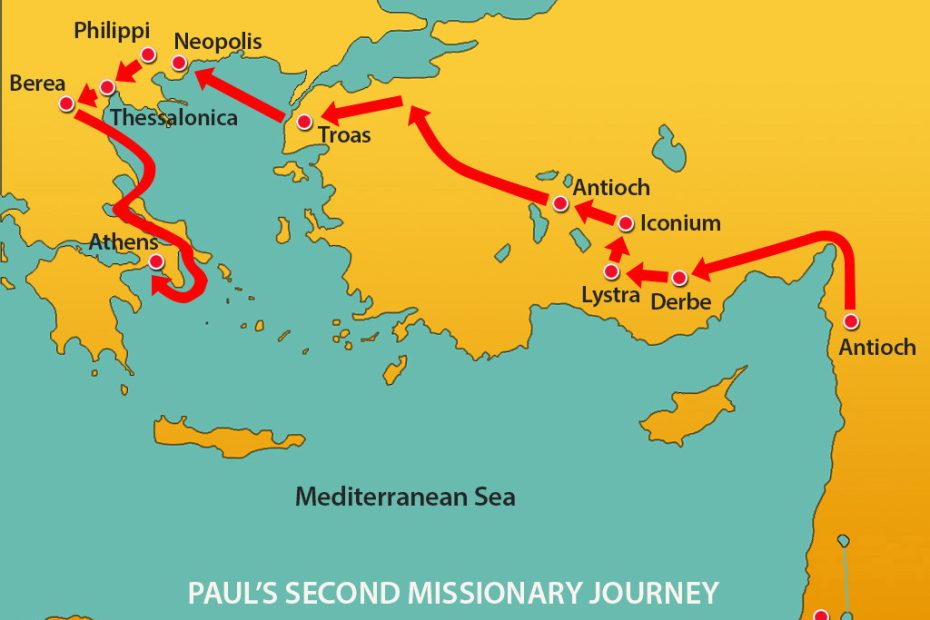
Thessalonians was a city in what we call Europe today. Paul and Silas were missionaries to the Thessalonians. They did not accept any support from them but worked as tent makers.
This is a Bible Study. Have your own Bible handy to look up the references mentioned.
If you do not have a Bible, I invite you to go to BibleGateway.com or another online Bible.
1. “Paul was not simply talking about a theory or a philosophy, but about something that worked in Thessalonica. The gospel walked down the streets of that city, and it got into the hearts and homes and lives of men and women.” (McGee, J. Vernon, Thru the Bible: Volume V. [Nashville: Thomas Nelson, 1983] 379)
2. “Paul and Silas had been beaten and humiliated at Philippi, yet they came to Thessalonica and preached…Like the other apostles before him, Paul boldly proclaimed the good news (Acts 4:13, 29, 31).” (Wiersbe, Warren W, The Bible Exposition Commentary New Testament Volume 2. [Colorado Springs: David C Cook, 1989], 164)
3. “His motives were not personal enrichment; his message was not tailored for mass appeal. The message he proclaimed was divine truth, not human invention.” (Martin, D. Michael, The New American Commentary Volume 33, [Broadman Press, © 1995], 72)
4. “Paul used the blue litmus paper of God to put down in his life, and it stood the test. He never used any low or tricky methods.” (McGee, 380)
Flatter
5. “Paul is speaking pretty frankly. He says that he never came into their midst to flatter anyone. He never played up to the rich people in the congregation.” (McGee, 380)
6. “He was not a glory seeker (‘glory seeking’ has the idea of the pursuit of prestige, honor, esteem of others. Such persons ‘live for the applause’).” (The Moody Bible Commentary, The Moody Bible Institute of Chicago, [Moody Publishers, Chicago, IL, 2014], 1881)
7. “He loved the Thessalonians with a mother’s love. They were dear to him. There are still ministers like that today. Maybe they aren’t all great expositors, but they believe the Word of God and preach it.” (McGee, 381)
8. “The gospel creates a community characterized by love. Reminding the Thessalonians of this not only clarified Paul’s motivation but also schooled the readers in the true character expected of them if they would work in the name of Christ.” (Martin, 81)
Work
9. “Paul worked hard, not just at preaching and teaching but also at his trade of tent-making to support himself.” (Moody, 1882)
10. “Paul’s life was also unblameable. Literally, this word means ‘not able to find fault in.’ His enemies might accuse him, but no one could level any charge against Paul and prove it.” (Wiersbe, 166)
11. “A father must not only support the family by working and teach the family by being a good example, He must also take time to speak to the family members.” (Wiersbe, 166)
12. “Paul knew the importance of teaching these new believers the truths that would help them grow in the Lord.” (Wiersbe, 166)
13. “Paul was thankful that the saints in Thessalonica had the right spiritual attitudes toward the Word of God. This helped them endure in the hour of suffering.” (Wiersbe, 167)
Suffer
14. “The same message that had transformed the Thessalonians was opposed by the world, and Paul noted that the Thessalonians had also experienced opposition.” (Moody, 1882)
15. “Just as Jewish believers of Judea had experienced opposition from their own people, the Jewish religious leadership, the Thessalonians had been opposed by their own countrymen.” (Moody, 1882)
16. “The sad thing was that Israel was filling up their sins and storing up wrath for the day of judgment. This image is used in Genesis 15:16, and Jesus used it in His sermon against the Pharisees (Matt. 23:32).” (Wiersbe, 169)
Taken
17. “Paul was not ashamed to state his affection for the Thessalonian Christians. He felt as though he had been ‘orphaned’ from them since he was their spiritual mother and father (1 Thess. 2:7, 11).” (Wiersbe, 169)
18. “Paul had spiritual discernment to see that it was Satan’s strategy that kept him from going to Thessalonica. The word Satan actually means ‘adversary.’” (McGee, 385)
19-20. “Paul says that one of the great things he anticipates when Christ comes to take His church will be the opportunity to see these people whom he has led to the Lord.” (McGee, 385)
References
Holman Christian Standard Bible (HCSB)
Copyright © 1999, 2000, 2002, 2003, 2009 by Holman Bible Publishers, Nashville Tennessee. All rights reserved.
New American Standard Bible (NASB)
New American Standard Bible®, Copyright © 1960, 1971, 1977, 1995, 2020 by The Lockman Foundation. All rights reserved.
New King James Version (NKJV)
Scripture taken from the New King James Version®. Copyright © 1982 by Thomas Nelson. Used by permission. All rights reserved.
In this article Scripture quotations taken from KJV.
McGee, J. Vernon, Thru the Bible: Volume V. Nashville: Thomas Nelson, 1983
Martin, D. Michael, The New American Commentary Volume 33, Broadman Press, © 1995
The Moody Bible Commentary, The Moody Bible Institute of Chicago, Moody Publishers, Chicago, IL, 2014
Wiersbe, Warren W, The Bible Exposition Commentary New Testament Volume 2. Colorado Springs: David C Cook, 1989
