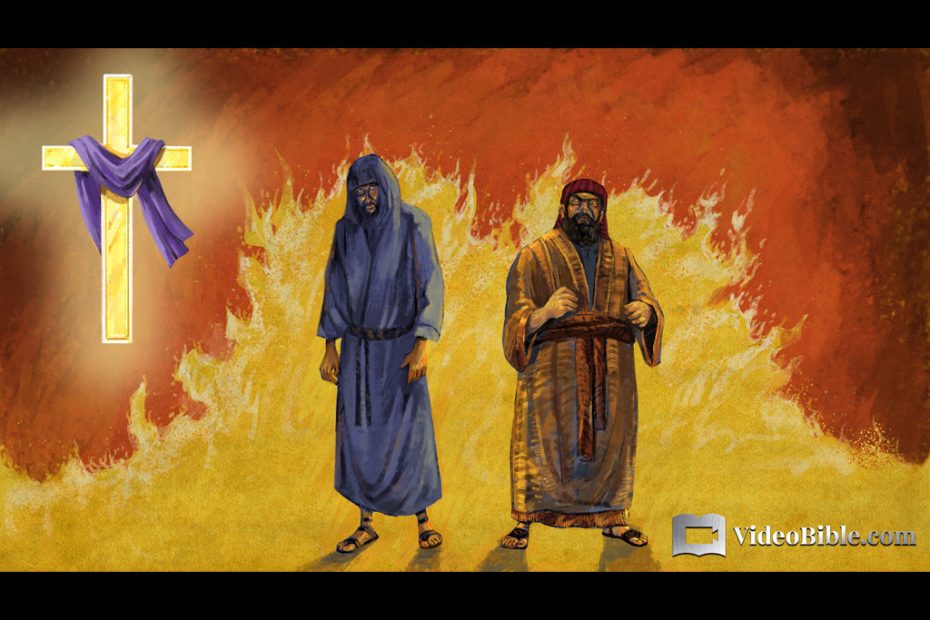
Judgment
Jude shows us that judgment will come to the world. Everyone sins. Jude gives us several examples of the judgment that is coming.
This is a Bible Study. Have your own Bible handy to look up the references mentioned.
If you do not have a Bible, I invite you to go to BibleGateway.com or another online Bible.
Judgment
1. “Most ancient letters begin with the sender, the recipients, and a greeting. The traditional view, which identifies Jude as the brother of Jesus Christ, is still the most persuasive (cf. Matt 13:55 par.)” (Schreiner, Thomas R. A The New American Commentary Volume 37, [Broadman Press, © 2003], 427)
2. “Jude prayed that mercy peace, and love would be multiplied because an abundance of these qualities was needed at a stressful time in the church’s life.” (Schreiner, 432)
3. “Jesus had promised the apostles in the Upper Room that the Spirit would teach them all things and guide them into the truth (cf. Jn 14:27; 16:12-15).” (The Moody Bible Commentary, The Moody Bible Institute of Chicago, [Moody Publishers, Chicago, IL, 2014]. 1996)
4. “False teachers had crept into the church. It had been predicted (cf. 2Pt 2:1-2) that ungodly persons who deny our only Master and Lord would come. These individuals viewed God’s grace as an excuse for open sin.” (Moody, 1996)
Examples
5. “In the wilderness Israel in unbelief was destroyed, and it is an example that God does judge apostates. When Israel came to Kadesh-Barnea, they refused to enter the Promised Land.” (McGee, J. Vernon, Thru the Bible: Volume V. [Nashville: Thomas Nelson, 1983], 855)
6. “The second example of judgment involves the angels who sinned. We have already noted that Jewish tradition links together the sin of angels in Gen 6:1-4, the judgment of Sodom and Gomorrah, and the punishment of the wilderness generation.” (Schreiner, 447)
7. “When you combine their descriptions, you discover that the citizens of Sodom and Gomorrah (and the other cities involved) were: Ungodly, filthy, wicked, unlawful, unjust, and given over to fornication.” (Wiersbe, Warren W, The Bible Exposition Commentary New Testament Volume 1 Matthew-Galatians. [Colorado Springs: David C Cook, 2004], 552)
Humility
8. “After presenting three examples of God’s judgment in history, we might expect Jude to say that the opponents would be judged as well. Instead of proclaiming their judgment, however, he announced their sins, providing a basis for their future judgment.” (Schreiner, 454)
9. “Michael was so humble that he did not presume to condemn the devil but asked the Lord to rebuke him.” (Schreiner, 458) (See Zechariah 3:2)
10. “Michael fully understood the devil’s wickedness and yet he did not presume to utter judgment against him, asking the Lord to judge him.” (Schreiner, 460)
11. “Each of these examples was self-directed and unwilling to submit to God’s established authority and order.” (Moody, 1997)
12. “Jude described the character of false teachers. Their concern was only for themselves. They promised blessing like clouds, autumn trees, waves of the sea, but there was no rain, no fruit, and only scum littering the beach.” (Moody, 1997)
Enoch
13. “The future judgment of the wicked is not described literally, but the images indicate that it will be horrible.” (Schreiner, 468)
14. Enoch “certainly lived in an ungodly age, and it seemed that sinners were getting away with their evil deeds. But Enoch made it clear that judgment was coming and that the ungodly would get what was coming to them!” (Wiersbe, 557)
15. The Lord is “coming to judge those who have opposed him and to reprove them publicly. The ‘everyone’ who will be judged refers only to unbelievers here.” (Schreiner, 472)
16. “The opponents were like Israel in the wilderness in that they were ‘grumblers’ who complained against the Lord (cf. Exod. 16-7-9, 12; 17:3; Num 11:1; 14:23; 16:41; 17:5, 11; Ps 105:15).” (Schreiner, 473)
17. “When the church assembled the New Testament books, it was required that each book be written either by an apostle or by someone closely associated with an apostle. Apostolic teaching was, and still is the test of truth.” (Wiersbe, 558)
18. “Before Satan can substitute his own lies, he must get rid of the truth of God’s word. If he cannot argue it away, he will laugh it away, and he can usually find somebody to laugh with him.” (Wiersbe, 559)
19. “The false teachers want to divide the church and lead people out of the true fellowship into their false fellowship. Not only do false teachers divide the church, but they also deceive the church, because they are ‘sensual, having not the Spirit.’” (Wiersbe, 559)
Final Words
20. “Believers were encouraged to build themselves up on [their] most holy faith. Jude also encourages his readers to be praying in the Holy Spirit.” (Moody, 1997)
21. God’s people “must keep themselves in God’s love to avoid apostasy so as not to be corrupted by the opponents.” (Schreiner, 483)
22-23. “The believer is to continually share the mercy he has received with others. Some are doubting, needing to be won to Christ through love. While the believer detests the unbeliever’s sin, he loves the sinner and seeks to reach him with the truth.” (Moody, 1998)
24-25. “If we want to keep our feet on the ground spiritually, walk straight, and not stumble, then we must yield ourselves fully to the Savior. He alone is able to guard us, but we must ‘keep ourselves in the love of God’ (Jude 21).”
References
McGee, J. Vernon, Thru the Bible: Volume V. Nashville: Thomas Nelson, 1983
Schreiner, Thomas R. A The New American Commentary Volume 37, [Broadman Press, © 2003]
The Moody Bible Commentary, The Moody Bible Institute of Chicago, [Moody Publishers, Chicago, IL, 2014]
Wiersbe, Warren W, The Bible Exposition Commentary New Testament Volume 1 Matthew-Galatians. Colorado Springs: David C Cook, 2004
