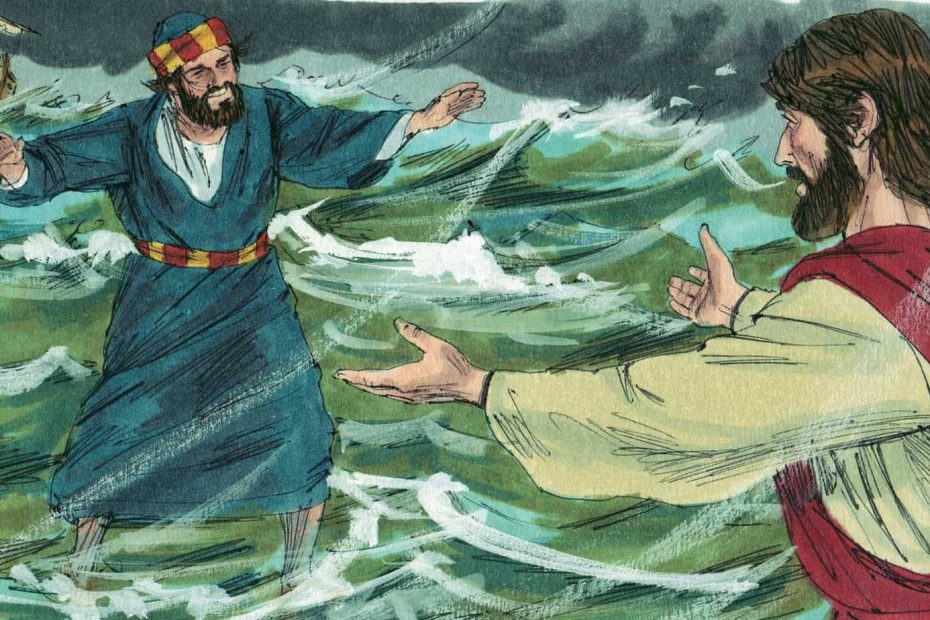
Faith
When we accept Jesus Christ as our Savior, we have faith to sustain us. Jesus will be with us in all our circumstances.
This is a Bible Study. Have your own Bible handy to look up the references mentioned.
If you do not have a Bible, I invite you to go to BibleGateway.com or another online Bible.
Faith
1a.” The unique signature, Simon Peter, argues for authenticity. No forger would alter the known introduction of 1 Peter.” (The Moody Bible Commentary, The Moody Bible Institute of Chicago, [Moody Publishers, Chicago, IL, 2014], 1968), V. [Nashville: Thomas Nelson, 1983], 1968)
1b.” The unique signature, Simon Peter, argues for authenticity. No forger would alter the known introduction of 1 Peter.” (Moody, 1968).
2.” Experiencing God’s grace and peace is dependent on the knowledge about God.” (Moody, 1968)
3. “The Christian life begins with saving faith, faith in the person of Jesus Christ. But when you know Jesus Christ personally, you also experience God’s power, and the power produces ‘life and godliness.’” (Wiersbe, Warren W, The Bible Exposition Commentary New Testament Volume 1 Matthew-Galatians. [Colorado Springs: David C Cook, 2004], 436)
4. “What Peter was saying was that believers inherit God’s promises as they come to know Christ, as they experience his moral excellence and glorious radiance in conversion.” (Schreiner, Thomas R. The New American Commentary Volume 37, [Broadman Press, © 2003], 293)
Characteristics
5. “The first quality of character Peter listed was virtue. We met his word in 2 Peter 1:3, and it basically means ‘excellence.’”
“Faith helps us develop virtue, and virtue helps us develop knowledge.
“This kind of knowledge does not come automatically. It comes from obedience to the will of God (John 7:17)”. (Wiersbe, 438)
6. “Temperence is the next quality on Peter’s list of spiritual virtues, and it means self-control.” (Proverbs 16:32) (Wiersbe, 438)
“Patience is the ability to endure when circumstances are difficult.” (Wiersbe, 438)
“Godliness simply means ‘God-likeness.’”
“He does what is right because it is right and because it is the will of God.” (Wiersbe, 438)
7. “Brotherly kindness If we love Jesus Christ, we must also love the brethren. We should practice an ‘unfeigned [sincere] love of the brethren (1 Peter 1:22) and not just pretend that we love them.” (Wiersbe, 438)
“The kind of love (‘charity’) spoken of in 2 Peter 1:7 is agape love, the kind of love that God shows toward lost sinners. This is the love that is described in 1 Corinthians 13, the love that the Holy Spirit produces in our hearts as we walk in the Spirit (Rom. 5:5; Gal. 5:22).” (Wiersbe, 439)
Growth
8. “The believer with true knowledge of Christ should possess these fruitful qualities. One who refuses to grow is blind having purposefully forgiveness.” (Moody, 1969)
9. “The unsaved person is in the dark because Satan has blinded his mind (2 Cor. 4:3-4). A person has to be born again before his eyes are opened and he can see the kingdom of God (John 3:3). But after our eyes are opened, it is important that we increase our vision and see all that God wants us to see.” (Wiersbe, 439)
10. “’Give diligence to make your calling and election sure’—he means, of course, more sure. In other words, the security of the believer is objective; it is something that cannot be disturbed.” (McGee, 724)
11. “While salvation in never by works the believer who pursues the course Peter outlines (cf. vv. 5-6) anticipates an especially glorious meeting with his Savior in heaven (cf. 2Tm 4:7-8, 18; Ac 7:56).” (Moody, 1969)
Reminders
12. “To produce growth, believers need information. Peter sensed a responsibility to remind his readers of things he had learned, truths they knew but had not recently considered.” (Moody, 1969)
13. “He was speaking of his body as his tabernacle. As long as he had life, he was going to remind them of these important things.” (McGee, 725)
14. Peter “again refers to his body as a ‘tent’, stressing again its weakness and transience.” (Schreiner, 309)
15. “We can depend on the written Word of God ‘it is written’ and it stands written forever. We can be saved through this living Word (1 Peter 1:23-25), nurtured by it (1 Peter 2:2), and guided and protected as we trust and obey.” (Wiersbe, 442)
Transfiguration
16. “The focus in this paragraph (16-18) is on the transfiguration of Jesus Christ. The experience is recorded by Matthew (11:1ff.), Mark (9:2-8), and Luke (9:28-36), yet none of those writers actually participated in it! Peter was there when it happened!” (Wiersbe, 442)
17. The transfiguration “confirmed Peter’s testimony about Jesus Christ (Matt. 16:13-16). Peter saw the Son in His glory, and he heard the Father speak from heaven.” (Wiersbe, 442)
18. “Peter confirmed again that he heard the divine voice while he was on the holy mountain.” (Schreiner, 317)
19. “The transfiguration anticipates the second coming, for it unveils the glory that will belong to Jesus at his coming.” (Schreiner, 318)
20. “Since the Spirit gave the Word, only the Spirit can teach the Word and interpret it accurately (see 1 Cor. 2:14-15).” (Wiersbe, 445)
21. “The words the prophets spoke, however, ultimately came from God. They inspired, or ‘carried along,’ by the Holy Spirit. Hence, Peter defended the accuracy of the prophecies in the Scriptures.” (Schreiner,324)
References
McGee, J. Vernon, Thru the Bible: Volume V. [Nashville: Thomas Nelson, 1983]
Schreiner, Thomas R. The New American Commentary Volume 37, [Broadman Press, © 2003]
The Moody Bible Commentary, The Moody Bible Institute of Chicago, [Moody Publishers, Chicago, IL, 2014]
Wiersbe, Warren W, The Bible Exposition Commentary New Testament Volume 1 Matthew-Galatians. [Colorado Springs: David C Cook, 2004]
Jude 2 Peter 2
