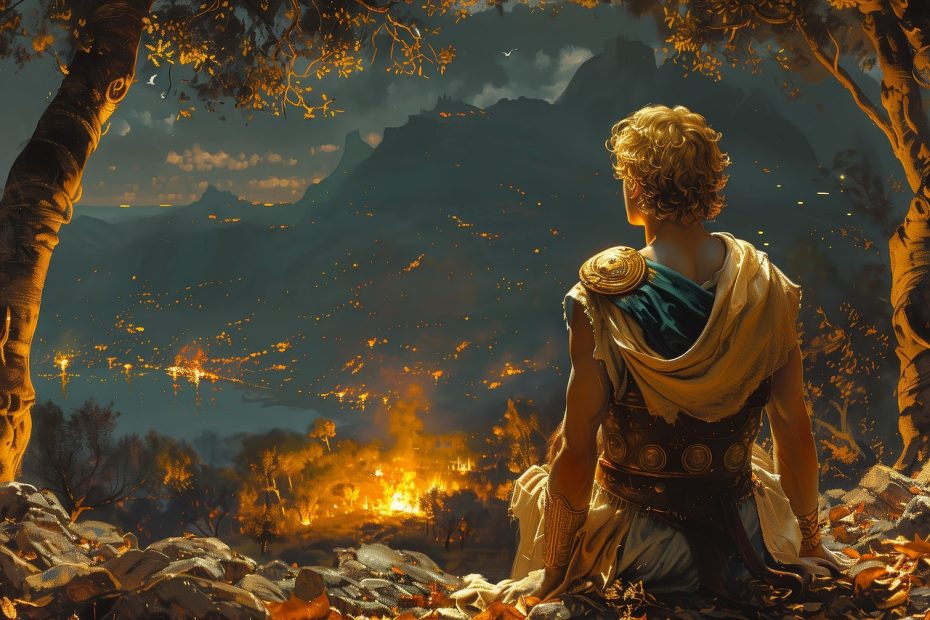
Babylon
Babylon played an important role in the Old Testament. What happened to it? Read Revelation 18 to learn more about its destruction.
This is a Bible Study. Have your own Bible handy to look up the references mentioned.
If you do not have a Bible, I invite you to go to BibleGateway.com or another online Bible.
1. “The first paragraph concludes that God will defeat his enemies on every occurrence of the Day of the Lord. When God wipes out a nation for its sin, the Day of the Lord happens for that group of people.” (Smith, Gary V. The New American Commentary, Volume 15a, Isaiah 1-39. [© Copyright 2007 B&H Publishing Group], 297)
Amos 5:20-21; Zephaniah 1:14-18
2. “The message abruptly begins with a command for warriors to gather for battle, but initially it is unclear who is giving the command and who is being sent out to ‘raise the banner.’” (Smith, 298)
3. “In this verse sanctified means ‘set apart for a specific use by some agency.’ God has ‘sanctified’ or raised up Babylon for a specific purpose.” (McGee, J. Vernon, Thru the Bible: Volume III. [Nashville: Thomas Nelson, 1983], 230)
“God recounted the call of His consecrated ones and mighty warriors to stand against Babylon.” (The Moody Bible Commentary, The Moody Bible Institute of Chicago, [Moody Publishers, Chicago, IL, 2014], 1029)
4. “The prophet then proclaimed the coming of the Lord’s massive army which would destroy Babylon (vv. 4-5).” (Moody, 1029)
5. “The Babylonians will be the ‘weapons of his indignation.’” (McGee, 231)
Judgment
6. “The city of Babylon was completely destroyed in 689 B. C. by Sennacherib and the Assyrian army, but it was rebuilt by Sennacherib’s son.” (Wiersbe, Warren W, The Bible Exposition Commentary Old Testament Wisdom and Poetry. [Colorado Springs: David C Cook, 2004], 24)
“The author introduces this topic by calling people to ‘howl, wail’ in astonishment and anguish because what is about to happen will be almost unimaginably horrible.” (Smith, 301)
7-8. “People will experience excruciating pain and utter helplessness comparable to what a woman experiences when giving birth to a child (cf. 21:3; 37:3).” (Smith, 301)
Day of the Lord
9. The Day of the Lord “will reveal what it means to experience the fullness of the wrath of God. The aim of God’s holy anger will be focuses on the extermination of evil sinners and the desolation of the places where they may live on the earth.” (Smith, 301)
10. “This is prophesied again by the Lord Jesus in Matthew 24:29.” (McGee, 231)
11. “This would strike terror in the enemy and throw the cosmos into confusion. What prompted such terror? Human sin! Babylon’s pride stood in the center of the divine attention.” [Max Anders and Trent C. Butler (2012). HOTC Vol. 15: Isaiah. B&H Publishing Group. Retrieved from https://read.lifeway.com]
“Isaiah saw in the fall of Babylon a picture of ‘the day of the Lord,’ that time when God will pour out His wrath on the whole world.” (Wiersbe, 24)
12. “Note that Ophir was a location, apparently in Arabia near Yemen (or perhaps in eastern Africa), traced back to a Semitic descendant of Noah (1 Chr. 1:23).” [Max Anders and Trent C. Butler (2012). HOTC Vol. 15: Isaiah. B&H Publishing Group. Retrieved from https://read.lifeway.com]
13-16.” Verses 13-16 go on to tell us that the Tribulation will be a time of worldwide destruction when no ‘flesh would survive’ except for the fact that God will preserve a remnant for Himself.” (McGee, 231)
“He will shake the heavens and the earth.” (Moody, 1929)
“Those who try to escape will be caught and killed.” (Moody, 1029)
“The picture is more horrible than what anyone can imagine or describe. The earth will be in disarray as the dependable forces of nature will disintegrate and people will turn to a savage form of debase animal existence.” (Smith,302)
Medes and Persia
17. Media and Persia became a dual nation and a mighty empire that conquered Babylon. Isaiah is speaking of that which was going to take place in the immediate future.” (McGee, 231)
18. “The Medes’ desire for blood pushed out all pity and compassion, so that even children were not spared.” (Moody, 1029)
19. “Babylon is described as the beauty of kingdoms, the glory of the Babylonians’ pride, but its fate would be the same as that of Sodom and Gomorrah.” (Moody, 1029)
20. “It would be made desolate so that not even nomads and shepherds would use the location. Only wild animals would live in Babylon after God. was done with it.” (Moody, 1029)
21. “Lions have been found making their homes admin the ruins.” (of Babylon) (McGee, 232)
22. “The once proud city would soon be disgraced as the Medes under the leadership of Cyrus overcame Babylon in 538 BC. The city’s ultimate eschatological destruction is also mentioned in Rv 18.” (Moody, 1029)
References
Holman Christian Standard Bible (HCSB)
Copyright © 1999, 2000, 2002, 2003, 2009 by Holman Bible Publishers, Nashville Tennessee. All rights reserved.
New American Standard Bible (NASB)
New American Standard Bible®, Copyright © 1960, 1971, 1977, 1995, 2020 by The Lockman Foundation. All rights reserved.
New King James Version (NKJV)
Scripture taken from the New King James Version®. Copyright © 1982 by Thomas Nelson. Used by permission. All rights reserved.
In this article Scripture quotations taken from KJV.
Smith, Gary V. The New American Commentary, Volume 15a, Isaiah 1-39. © Copyright 2007 B&H Publishing Group
McGee, J. Vernon, Thru the Bible: Volume III. Nashville: Thomas Nelson, 1983
The Moody Bible Commentary, The Moody Bible Institute of Chicago, Moody Publishers, Chicago, IL, 2014
Wiersbe, Warren W, The Bible Exposition Commentary Old Testament Wisdom and Poetry. Colorado Springs: David C Cook, 2004
