Kingdom
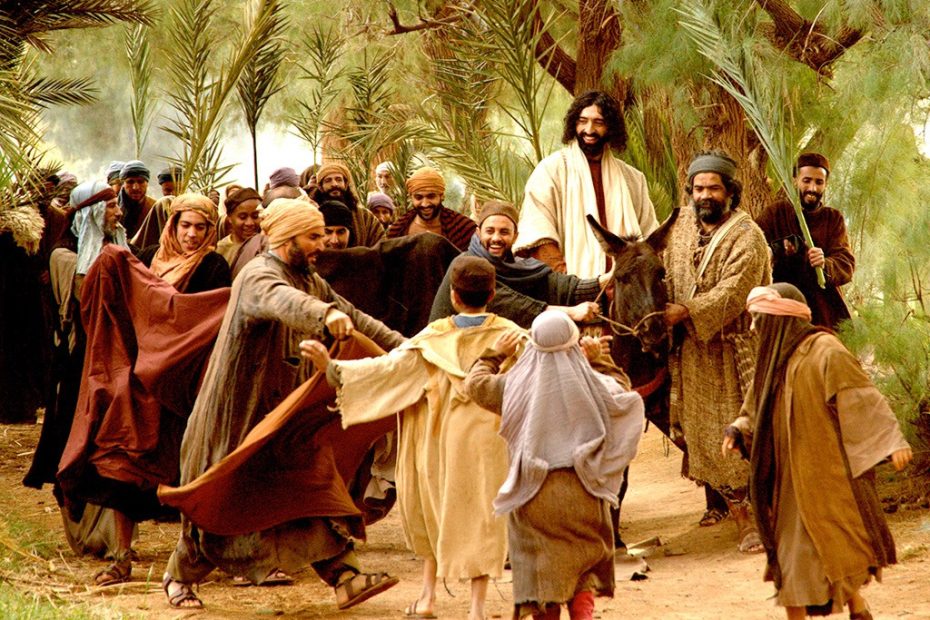
Jesus is preparing to establish His kingdom. He is entering Jerusalem on a donkey and is treated as royalty. Are you in His kingdom?
This is a Bible Study. Have your own Bible handy to look up the references mentioned.
If you do not have a Bible, I invite you to go to BibleGateway.com or another online Bible.
Kingdom
1. “Jericho was the city God had given into the hand of Joshua. A curse was placed on whoever would rebuild it. The man who rebuilt it in the days of Ahad reaped the curse in all its fulness.” (McGee, J. Vernon, Thru the Bible: Volume IV. [Nashville: Thomas Nelson, 1983], 331)
2. “Jericho was a well-known toll place in Palestine, especially for goods passing east and west between Judea and Perea.” (Stein, H. Robert, The New American Commentary Volume 24, Luke. [Broadman Press, 1996], 467)
3-5. “Zaccheus had the desire and determination to see Jesus. Jesus saw not only the figure in the sycamore tree but also the desire of the man’s heart. He spoke to him and invited Himself to Zaccheus’s house.” (The Moody Bible Commentary, The Moody Bible Institute of Chicago, [Moody Publishers, Chicago, IL, 2014], 1588)
Sinful Man
6. “Overjoyed at this unexpected privilege, the short man scurried down the tree. This time he had no trouble getting through the crowd to Jesus.” [Max Anders and Trent C. Butler (2012). HNTC Vol. 03: Luke. B&H Publishing Group. Retrieved from https://read.lifeway.com]
7. “But as they let the tax collector through, the crowd must have complained. How can this be? they grumbled. We thought Jesus was Messiah, and he is going to eat with a sinful man, a man who represents the enemy government and takes our money to give to them.” [Max Anders and Trent C. Butler (2012). HNTC Vol. 03: Luke. B&H Publishing Group. Retrieved from https://read.lifeway.com]
8. “Something had happened to this man! He admitted that he had been robbing the poor and promised to give half of his goods to the poor and to restore fourfold to those whom he and falsely taxed.” (McGee, 333)
9. “Zaccheus was not saved because he promised to do good works. He was saved because he responded by faith to Christ’s gracious word to him.” (Wiersbe, Warren W, The Bible Exposition Commentary New Testament Volume 2. [Colorado Springs: David C Cook, 1989], 252)
10. “His purpose was to bring salvation to lost people. Jesus dedicated the three years of his earthly ministry to finding people who knew they were lost and showing them God’s way of salvation—the way of repentance and faith.” [Max Anders and Trent C. Butler (2012). HNTC Vol. 03: Luke. B&H Publishing Group. Retrieved from https://read.lifeway.com]
Ten Minas
11. “Many of His followers, including His apostles, think that He was about to set up His kingdom on earth. But He is coming to Jerusalem to die. He is showing them that the kingdom is going to be postponed.” (McGee, 333)
12. “Jesus knew that many of the people in the crowd were hoping to see Him establish the kingdom, so He gave this parable to clarify things.” (Wiersbe, 252)
13. “This is a much smaller amount than Matthew’s talents A mina was worth about a sixtieth of a talent or about one hundred drachmas, i.e., about three months’ wages.” (Stein, 473)
14. “For Luke’s readers, however, this would be interpreted as reflecting the Jewish rejection of Jesus.” (Stein, 473)
15. “Literally having received the kingdom. In the reality part of the parable Luke was thinking of Christ’s resurrection/ascension as his accession to kingship.” (Stein, 473)
16. “In a parable 1,000 percent return is perfectly reasonable. Actually this was not impossible in the first century.” (Stein, 473)
17. “You are to be faithful to that over which He has made you steward. Your pound may be an entire city, a handful of people, or a home. Whatever it is, you are to be faithful.” (McGee, 334)
18. “With two of the slaves the accounting was good. Each man had made money by his investments, and each was commended and given greater opportunity for service.” (Moody, 1588)
19. The second slave also doubled the money he had been given. His reward was to take charge of five cities.
Fear
20. “This servant did nothing with the mina given him.” He kept it in a piece of cloth. “This ‘napkin’ (RSV) probably refers to a scarf worn around one’s face or neck for protection from the son.” (Stein, 473)
21. “He knew the king’s habits and feared what would happen to him if he should lose his money. So he gave the king back what he had received. But this was not faithful obedience. This was not responsibility. This was lazy, fearful idleness. He did not put his money to work as the king ordered.“ [Max Anders and Trent C. Butler (2012). HNTC Vol. 03: Luke. B&H Publishing Group. Retrieved from https://read.lifeway.com]
22. “The nobleman judged the wicked servant on the basis of his own presuppositions. If his presuppositions about the nobleman’s character are false and the hearers/readers of the parable know that they are, he is even more condemned.” (Stein, 474)
23. “The nobleman states, ‘if what you said about me is true, you should then at least have invested my money in a bank. In his way the master would at least have received interest.” (Stein, 474)
Faithful
24. “The one who served faithfully is rewarded with even more.” (Stein, 474)
25. “Jesus’ kingdom represented an entirely different type of system. It was a system of grace to the faithful and trusting, but judgment for those who trusted themselves rather than leaning on God’s grace.” [Max Anders and Trent C. Butler (2012). HNTC Vol. 03: Luke. B&H Publishing Group. Retrieved from https://read.lifeway.com]
26. “Jesus divided people into two classes: those who have and those who do not. The latter class includes very religious people who think they know God and believe they have the only way to gain his rewards.” [Max Anders and Trent C. Butler (2012). HNTC Vol. 03: Luke. B&H Publishing Group. Retrieved from https://read.lifeway.com]
27. The Pharisees and scribes “did not want his type of relationship to God. They refused to acknowledge him as king. Eternal slaughter and death awaited them. Active opposition to God brings even greater punishment than refusal to do things God’s way.” [Max Anders and Trent C. Butler (2012). HNTC Vol. 03: Luke. B&H Publishing Group. Retrieved from https://read.lifeway.com]
Triumphal Entry
28. Headed toward Jerusalem.
29. “The Mount of Olives lies directly east of Jerusalem 2,660 feet above sea level. To reach Jerusalem one would proceed west down the Mount of Olives, through the Kidron Valley, and into the temple area through the eastern gate, later called the Golden Gate.” (Stein, 478)
30. “The owners of the donkey and the colt were disciples of the Lord and had everything ready for Him.” (Wiersbe, 254)
31. “The fact that the rulers planned to kill Jesus made it even more important that the owners be protected (John 7-1, 19, 25; 8:37; 11:47-57).” (Wiersbe, 254)
32-35. “Events occurred just as Jesus described. So the disciples brought the donkey to Jesus, threw their robes on it as a saddle, and set Jesus on it. (see Zechariah 9:9).” [Max Anders and Trent C. Butler (2012). HNTC Vol. 03: Luke. B&H Publishing Group. Retrieved from https://read.lifeway.com]
36. “Spreading cloaks on the road is an act of homage as in 2 Kgs 9:13. Luke made no mention of the spreading of branches, perhaps due to the nationalistic overtones of such an act.” (Stein, 479)
Messianic Presence
37-38. “The words used by the shouting crowds, indicated the messianic presence.” (Moody, 1589)
“This is the only time that Jesus permitted a public demonstration on His behalf, and He did so for at least two reasons. First, He was fulfilling prophecy and presenting Himself as Israel’s king (Zech. 9:9 above).” (Wiersbe, 254)
39. “This was too much for the Pharisees. They came to crucify Jesus, not to praise him. They asked Jesus to silence the disciples. Do not let such blasphemy continue, they said.” [Max Anders and Trent C. Butler (2012). HNTC Vol. 03: Luke. B&H Publishing Group. Retrieved from https://read.lifeway.com]
40. “The Lord Jesus Christ recognized that eternal and significant issues were at stake and to rebuke His followers would force the silent stones to cry out.” (McGee, 335)
41 “Jesus wept, however, not for himself and his fate but rather for the fate of Jerusalem and the people of Israel (Luke 23:28-31).” (Stein, 484)
42. This day “refers to the ‘time of God’s coming to you’ (Luke 19:44), which refers broadly to the coming of God’s kingdom but more narrowly to the coming of Israel’s King in 19:28-40.” (Stein, 484)
43-44. “Jesus looked ahead to A.D. 70, when the Roman government would have enough of Jewish rebellions and would destroy the city. The inhabitants would not escape.” [Max Anders and Trent C. Butler (2012). HNTC Vol. 03: Luke. B&H Publishing Group. Retrieved from https://read.lifeway.com]
Den of Thieves
45. “Jesus’ cleansing of the temple was a messianic act in the sense that he did this as the Messiah.” (Stein, 485)
46. See Jeremiah 7:11
47-48. “He taught in the temple, and His popularity provoked the opposition of the chief priests and the scribes.” (Moody, 1589)
References
Holman Christian Standard Bible (HCSB)
Copyright © 1999, 2000, 2002, 2003, 2009 by Holman Bible Publishers, Nashville Tennessee. All rights reserved.
New American Standard Bible (NASB)
New American Standard Bible®, Copyright © 1960, 1971, 1977, 1995, 2020 by The Lockman Foundation. All rights reserved.
New King James Version (NKJV)
Scripture taken from the New King James Version®. Copyright © 1982 by Thomas Nelson. Used by permission. All rights reserved.
In this article Scripture quotations taken from KJV.
McGee, J. Vernon, Thru the Bible: Volume IV. Nashville: Thomas Nelson, 1983
Max Anders and Trent C. Butler (2012). HNTC Vol. 03: Luke. B&H Publishing Group. Retrieved from https://read.lifeway.com]
The Moody Bible Commentary, The Moody Bible Institute of Chicago, Moody Publishers, Chicago, IL, 2014
Stein, H. Robert, The New American Commentary Volume 24, Luke. Broadman Press, 1996
Wiersbe, Warren W, The Bible Exposition Commentary New Testament Volume 2. Colorado Springs: David C Cook, 1989
How To Become a Christian
