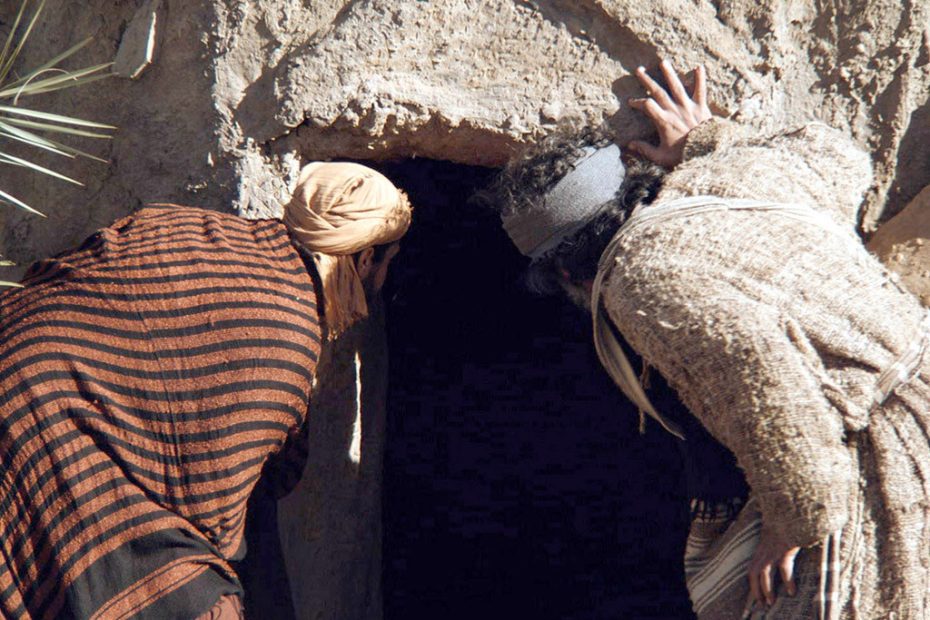
Resurrection
This article discusses the resurrection of all of us after we have died. Paul explains it so that we all can believe it when you have accepted Jesus as your Savior or not.
This is a Bible Study. Have your own Bible handy to look up the references mentioned.
If you do not have a Bible, I invite you to go to BibleGateway.com or another online Bible.
1. “An integral part of the gospel message was the fact of Christ’s resurrection.” (Wiersbe, Warren W, The Bible Exposition Commentary New Testament Volume 2. [Colorado Springs: David C Cook, 1989], 617)
“The gospel, or good news, is the message of God’s saving work in Christ. Up to this point, Paul had oriented the gospel message around Christ’s death, but here he preached the gospel by emphasizing the resurrection.” [Max Anders and Richard Pratt (2012). HNTC Vol. 07: I & II Corinthians. B&H Publishing Group. Retrieved from https://read.lifeway.com]
2. “Only by this gospel could they be saved from God’s judgment. Salvation comes through belief in the good news of Christ’s death and resurrection.” [Max Anders and Richard Pratt (2012). HNTC Vol. 07: I & II Corinthians. B&H Publishing Group. Retrieved from https://read.lifeway.com]
3. “The phrase ‘Christ died for our sins’ expresses a central tenet of the Christian faith.” (Taylor, Mark, The New American Commentary Volume 28, 1 Corinthians. [Broadman Press, 1996], 372)
4. “He cites biblical attestation (according to the Scriptures, possibly Is 53:6) and historical proof (that He was buried, v. 4a) supporting the fact of the Messiah’s death.” (The Moody Bible Commentary, The Moody Bible Institute of Chicago, [Moody Publishers, Chicago, IL, 2014], 1799)
“The second feature of the gospel is that Christ was raised from the dead (v. 4b).” (Moody, 1799)
Appearances
5. “He was seen ‘of the twelve’…He appeared to Cephas privately, then He appeared to the ten (Judas was dead at this time). ‘The Twelve’ was used as a collective term for the body of disciples…When you put them all together and Paul joins them, you have twelve men.” (McGee, J. Vernon, Thru the Bible: Volume V. [Nashville: Thomas Nelson, 1983], 73)
6. “The five hundred plus brethren all saw Him at the same time, so it could not have been a hallucination or deception.” (Wiersbe, 617)
7. “James was probably the Lord’s half-brother, but no mention of this individual appearance is found outside of 1Co 15.” (Moody, 1799)
8. “He was seen again by all the apostles. Lastly, He was seen by Paul.” (McGee, 74)
9. “Paul viewed himself as fully within the apostolic ranks, but different from the rest and viewed himself as the least of them due to his persecution of believers.” (Moody, 1800)
10. Paul “tells us that it was the grace of God that enabled him to accomplish what he did.” (McGee, 74)
11. “’Yes, we agree that Jesus was raised from the dead.’ Then Paul would reply, if you believe that, then you must believe in the resurrection of all of the dead!” (Wiersbe, 617)
No Resurrection?
12-13. “If people cannot be resurrected bodily, then Jesus was not resurrected. The fact of Christ’s resurrection invalidated any philosophical objection to the possibility of resurrection.” [Max Anders and Richard Pratt (2012). HNTC Vol. 07: I & II Corinthians. B&H Publishing Group. Retrieved from https://read.lifeway.com]
14. “Without the resurrection, our peaching is vain (‘empty’ ‘without results’; cf. v. 10), it will produce no fruit, and faith also is vain, i.e., with ultimately gain nothing (v, 17).” (Moody, 1800)
15. “All the apostles were liars if Christ had not risen. Every one of these men was a false witness if Christ is still in the grave.” (McGee, 75)
16-17. “If Christ is not raised, then, my friend, you are a lost, hell-doomed sinner, and that is all you can ever be. If Christ be not raised, every one of us is still in our sins.” (McGee, 75)
18-19. “Believers who died have perished (‘suffered inestimable ruin’ forever) (v. 18), and all Christian are pitiable for they have chosen a life of self-denial for no real lasting purpose (v. 19).” (Moody, 1800)
Christ Raised!
20. “The first fruits imagery (v. 20) is a reference to the initial offering of crops to the Lord in anticipation of a bountiful harvest that would follow (Ex 22:28; 23:19;34:26; Lv 23:10-11; Nm 15:18-21).” (Moody, 1804)
21-22. These “explain what Paul meant by the first fruits imagery. Just as union with Adam resulted in death for the race, all those in Christ will participate in the resurrection.” (Moody, 1801)
23. “The resurrection to blessed eternal life is only for all in Christ (v. 22), (emphasis added) and those who are Christ’s (v. 23).” (Moody, 1801)
24. “After Christ returns, then the end will come. It will be time for the final judgment and the formation of the new creation. At this time, Christ will give over the kingdom to God the Father.” [Max Anders and Richard Pratt (2012). HNTC Vol. 07: I & II Corinthians. B&H Publishing Group. Retrieved from https://read.lifeway.com]
25. “Paul pointed out that Christ must reign until he has put all his enemies under his feet. This verse recalls Psalm 110:1. This psalm spoke of the promise of great victories given to the descendants of David.” [Max Anders and Richard Pratt (2012). HNTC Vol. 07: I & II Corinthians. B&H Publishing Group. Retrieved from https://read.lifeway.com].”
Death
26. “The elimination of death is the last great work of Christ. This will occur when he raises believers to everlasting life and frees them from the power of death (Heb. 2:14-15).” [Max Anders and Richard Pratt (2012). HNTC Vol. 07: I & II Corinthians. B&H Publishing Group. Retrieved from https://read.lifeway.com]
See also Psalm 110:1
27. “He noted that it was clear or obvious to those reading Psalm 110 that the term everything did not include God himself, because God the Father is the one who put everything under Christ.” [Max Anders and Richard Pratt (2012). HNTC Vol. 07: I & II Corinthians. B&H Publishing Group. Retrieved from https://read.lifeway.com]
28. “In other words, Psalm 110:1 makes it plain that God puts everything under the feet of David’s son.” [Max Anders and Richard Pratt (2012). HNTC Vol. 07: I & II Corinthians. B&H Publishing Group. Retrieved from https://read.lifeway.com]
Baptism
29. “The greatest difficulty with this verse is that there are no other biblical references to anything like a baptism for the dead. Explanations for this verse are varied, and none is convincing. Perhaps the most likely explanation is that Paul identified a practice of which he did not approve.” [Max Anders and Richard Pratt (2012). HNTC Vol. 07: I & II Corinthians. B&H Publishing Group. Retrieved from https://read.lifeway.com]
30-31. These verses “refer to Paul’s ordeals endured during his missionary journeys. Such suffering is meaningless if the resurrection of Christ and His people is not true.” (Moody, 1802)
32. “If Christ is not risen and if the dead will not be resurrected then we might as well adopt the hedonistic philosophy of Epicureans who say, ‘Let us eat and drink; for to-morrow we die.” (McGee, 77)
33-34. “The Corinthian believers were being deceived by those who questioned the Resurrection…Paul is saying that if they get the wrong information, they will act wrong. He admonishes them to stop sinning—because there will be a resurrection.” (McGee, 77)
Resurrection Body
35. “Men fail to distinguish the difference between the resurrection of the body and the immortality of the soul.” (McGee 77)
36. “’How foolish!’ ‘Fool’ in the biblical sense denotes the person who denies God (cf. Ps 14:1: 52:1; 92:6).” (Taylor, 402)
37. “We are waiting for the rapture of the church when Christ takes the believers out of the world. If at the time of the Rapture we are already dead, we will be raised up. If we are still alive at the time of the Rapture, we’ll be caught up and changed.” (McGee, 78)
38. “The resurrection body competes the work of redemption and gives to us the image of the Savior.” (Wiersbe, 620)
39. “If God is able to make different kinds of bodies for men, animals, birds, and fish, why can He not make a different kind of body for us at the resurrection?” (Wiersbe, 620)
40. “Not only are there earthly bodies, but there are also heavenly bodies; and they differ from one another.” (Wiersbe, 620)
41. “God does not have any problem coming up with shapes, sizes, and substances for each item in his universe.” [Max Anders and Richard Pratt (2012). HNTC Vol. 07: I & II Corinthians. B&H Publishing Group. Retrieved from https://read.lifeway.com]
Resurrection of the Dead
42. “The body that was given Adam was always subject to death. Although he would not have died if he had not sinned, his body would have been subject to death. However, by resurrection we get a body that is incorruptible.” (McGee, 78)
43. “We will get glory and color and beauty and power—all of these things—with the new body.” (McGee, 78)
44a. “It is best to take the term spiritual not as ‘immaterial,’ but as a reference to the Holy Spirit. In other words, believers’ resurrected bodies will be spiritual because they will be renewed by the Holy Spirit.” [Max Anders and Richard Pratt (2012). HNTC Vol. 07: I & II Corinthians. B&H Publishing Group. Retrieved from https://read.lifeway.com]
44b. “To make his position perfectly clear, Paul stated that the existence of a natural (ordinary) body necessitates the existence of a spiritual (renewed by the Holy Spirit) body.” [Max Anders and Richard Pratt (2012). HNTC Vol. 07: I & II Corinthians. B&H Publishing Group. Retrieved from https://read.lifeway.com]
Natural verses Spiritual
45. “Adam received life in a natural body as do all those in him. But there is also the last Adam, who has a resurrected body perfectly suited for the eternal spiritual realm and who gives such resurrection life to His own.” (Moody, 1803)
46. “Just as old creation logically precedes new creation, so also the natural body precedes the spiritual body.” (Taylor, 409)
47. “Adam came first, was created from earth, had life suited only for the natural realm, and his body returned to the earth from which it was fashioned.” (Moody, 1803)
48. “Adam’s descendants share the same kind of body with him. But Christ came after Adam, and in His resurrection had a body designed by and suited for heaven, and His people will share a similar resurrection body.” (Moody, 1803)
49. “Likewise believers have a natural body first, then followed by the reception of the resurrection body.” (Moody, 1803)
Changed
50. “The kingdom of God in 15:50 is future, when those who belong to Christ will be raised and the Son hands the kingdom over to the Father (cf. 15:23-24).” (Taylor, 412)
51. “The believer’s present body must be transformed, whether living or dead at Christ’s return…His concern is to show that change is necessary for the living as well as the dead.” (Taylor, 412)
52. “Those believers who are still alive at the time of Christ’s return will be changed instantly. Without passing through death, they will receive heavenly, spiritual, imperishable bodies.” [Max Anders and Richard Pratt (2012). HNTC Vol. 07: I & II Corinthians. B&H Publishing Group. Retrieved from https://read.lifeway.com]
53. “Verse 53 explains that transformation is essential (cf. 15:50) and describes the change using a clothing metaphor.” (Heb 1:11-12). (Taylor, 413)
Death
54a. “Put on (vv. 53-34) was a common term for getting dressed, and implies the corporeality of the raised body. It is vested with immortality, when death is utterly defeated for all believers.” (Moody, 1804)
54b. “Death is swallowed up in victory alludes to Is 25:8, where Isaiah prophesies that God will swallow up death when He comes to rescue His people.” (Moody, 1804)
55. “Verse 55 alludes to Hs 13:14, in which God tells death and Sheol to get ready to assist Him the judgement of Ephrain. But in the resurrection, there will be no more judgement, grave, or death.” (Moody, 1804)
56. “The spiritual state of death produces both acts of sin and physical death.” (Moody, 1804)
57. “The victory comes through Jesus Christ not because he died, but because he was raised from the dead. Because believers are united to Christ, they must be resurrected like him.” [Max Anders and Richard Pratt (2012). HNTC Vol. 07: I & II Corinthians. B&H Publishing Group. Retrieved from https://read.lifeway.com]
58. “His appeal to the Corinthians is to be steadfast and immovable, complementary terms qualified by the phrase ‘always abounding in the work of the Lord,’ and followed by the grounds ‘because you know that your labor in the Lord is not in vain.’” (Taylor, 415)
References
Holman Christian Standard Bible (HCSB)
Copyright © 1999, 2000, 2002, 2003, 2009 by Holman Bible Publishers, Nashville Tennessee. All rights reserved.
New American Standard Bible (NASB)
New American Standard Bible®, Copyright © 1960, 1971, 1977, 1995, 2020 by The Lockman Foundation. All rights reserved.
New King James Version (NKJV)
Scripture taken from the New King James Version®. Copyright © 1982 by Thomas Nelson. Used by permission. All rights reserved.
In this article Scripture quotations taken from KJV.
McGee, J. Vernon, Thru the Bible: Volume V. Nashville: Thomas Nelson, 1983
Max Anders and Richard Pratt (2012). HNTC Vol. 07: I & II Corinthians. B&H Publishing Group. Retrieved from https://read.lifeway.com
The Moody Bible Commentary, The Moody Bible Institute of Chicago, Moody Publishers, Chicago, IL, 2014
Taylor, Mark, The New American Commentary Volume 28, 1 Corinthians. Broadman Press, 1996
Wiersbe, Warren W, The Bible Exposition Commentary New Testament Volume 2. Colorado Springs: David C Cook, 1989
