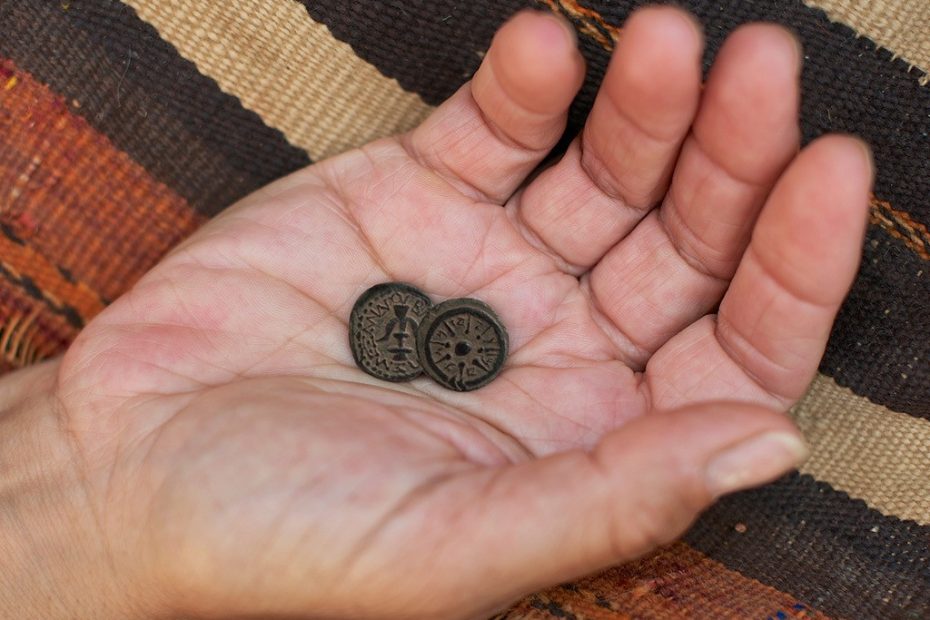
Offering
Paul wanted to take an offering to the Jerusalem church. He asked the believers to contribute to this offering. This article includes the closing of this letter from Paul to the church in Corinth.
This is a Bible Study. Have your own Bible handy to look up the references mentioned.
If you do not have a Bible, I invite you to go to BibleGateway.com or another online Bible.
Offering
1. “Paul begins this chapter by talking about taking up an offering…He is talking about a collection of money for the poor saints in Jerusalem.” (McGee, J. Vernon, Thru the Bible: Volume V. [Nashville: Thomas Nelson, 1983]. 81)
“Paul’s greatest motive for taking up the offering was to help unite Jewish and Gentile believers. Paul was a missionary to the Gentiles, and this bothered some of the Jewish believers (Acts 17:21-25).” (Wiersbe, Warren W, The Bible Exposition Commentary New Testament Volume 2. [Colorado Springs: David C Cook, 1989], 621)
2. “On the first day of the week, each person should set aside funds ‘in keeping with his income’ and save it until Paul arrives.” (Taylor, Mark, The New American Commentary Volume 28, 1 Corinthians. [Broadman Press, 1996], 419)
“Paul didn’t want his meeting with them to be spoiled by high pressure methods of taking up an offering.” (McGee, 82)
3-4. “They needed to select trustworthy people to transport the funds to Jerusalem because Paul intended to spend the winter with them (v. 6), and may have wished the money to be sent to Jerusalem sooner that he would have traveled there (vv. 3-4).” (The Moody Bible Commentary, The Moody Bible Institute of Chicago, [Moody Publishers, Chicago, IL, 2014], 1804)
Travel
5. “Paul began this section with some reflections on his travel plans. He mentioned his hope that after going through Macedonia he would be able to come to the Corinthians.” [Max Anders and Richard Pratt (2012). HNTC Vol. 07: I & II Corinthians. B&H Publishing Group. Retrieved from https://read.lifeway.com]
6. “The reason Paul gives for his extended visit is so that ‘you may send me on my way, wherever I may go’, which may refer to making provision for further missionary work.” (Taylor, 423)
7. “Paul’s intentions represent both strategic insight and firm planning yet an openness to the contingencies of God’s will: ‘If the Lord permits.’” (Taylor, 423)
8. “For the time being Paul plans to remain in Ephesus until Pentecost, a statement that provides both the location of the writing of the letter and a reference to a particular time of the year (i.e. spring).” (Taylor 23)
9. “Paul stayed in Ephesus because there were many who oppose[d] him. In this, the apostle demonstrated great sensitivity to the Holy Spirit’s work. He also showed himself to be flexible, ready to change his plans as the Lord directed him.” [Max Anders and Richard Pratt (2012). HNTC Vol. 07: I & II Corinthians. B&H Publishing Group. Retrieved from https://read.lifeway.com]
Timothy
10. “The apostle’s next general remarks concerned his student and friend Timothy. Paul had already mentioned Timothy in 4:17. This Timothy was the same pastor and missionary to whom Paul wrote 1 and 2 Timothy.” [Max Anders and Richard Pratt (2012). HNTC Vol. 07: I & II Corinthians. B&H Publishing Group. Retrieved from https://read.lifeway.com]
11. “Paul was concerned that Timothy might receive ill treatment for them inasmuch as he was going as Paul’s representative to attempt to address some of the moral and doctrinal issues there.” (Moody, 1804)
12. “Apollos was an eloquent Jew who was brought into the full understanding of the gospel by Priscilla and Aquila (Acts 18:24-28. He had ministered with great power at Corinth, and there was a segment of the church there that felt attached to him.” (1 Cor. 1:12; 3:4-8).” (Wiersbe, 624)
13. Watch simply means ‘Be alert! Be vigilant!’ The enemy is always at hand, and we are never safe from attack. Satan would certainly attack the church and try to hinder the ministry of Timothy or Apollos.” (Wiersbe, 624)
14. “Even manliness needs to be balanced with love, lest leadership become dictatorship.” (Wiersbe, 624)
Stephanas
15. “The Corinthians and other believers had benefited from the faithful work of Stephanas and his family. The Corinthians owed them a great spiritual debt.” [Max Anders and Richard Pratt (2012). HNTC Vol. 07: I & II Corinthians. B&H Publishing Group. Retrieved from https://read.lifeway.com]
16. Paul “urges the Corinthians to submit to those who come to serve them.” (McGee, 84)
17. “The apostle encouraged the congregation to appreciate the ministries of these leaders. Leaders in the church can become bitter and negative because they deal constantly with problems.” [Max Anders and Richard Pratt (2012). HNTC Vol. 07: I & II Corinthians. B&H Publishing Group. Retrieved from https://read.lifeway.com]
18. “Paul is saying, ‘Give them a vote of thanks when they get back.” (McGee, 84)
We need to thank those who serve us in our own churches.
19-24. “The letter concludes with standard greetings (16:19-22), a grace benediction (16:23), and a postscript (16:24).” (Taylor, 431)
References
Holman Christian Standard Bible (HCSB)
Copyright © 1999, 2000, 2002, 2003, 2009 by Holman Bible Publishers, Nashville Tennessee. All rights reserved.
New American Standard Bible (NASB)
New American Standard Bible®, Copyright © 1960, 1971, 1977, 1995, 2020 by The Lockman Foundation. All rights reserved.
New King James Version (NKJV)
Scripture taken from the New King James Version®. Copyright © 1982 by Thomas Nelson. Used by permission. All rights reserved.
In this article Scripture quotations taken from KJV.
McGee, J. Vernon, Thru the Bible: Volume V. Nashville: Thomas Nelson, 1983
Max Anders and Richard Pratt (2012). HNTC Vol. 07: I & II Corinthians. B&H Publishing Group. Retrieved from https://read.lifeway.com
The Moody Bible Commentary, The Moody Bible Institute of Chicago, Moody Publishers, Chicago, IL, 2014
Taylor, Mark, The New American Commentary Volume 28, 1 Corinthians. Broadman Press, 1996
Wiersbe, Warren W, The Bible Exposition Commentary New Testament Volume 2. Colorado Springs: David C Cook, 1989
Resurrection 2 Corinthains 1 Comfort
